
Great design turns heads and makes a difference. Great logistics keep your blood pressure down because it means everything is going to run smoothly. Ultimately, both matter.
You can have the most impressive concept on paper. However, if the booth doesn’t arrive on time, gets damaged in transit, or misses the target move-in window, the show can go sideways fast. That’s why the fabrication partner you pick is more than a builder. They are a logistics multiplier. Which means that they think in crates, schedules, labels, and loading docks, so you don’t have to.
In this guide, you’ll see how the right fabrication partner removes risk, speeds up your timeline, and protects your budget from surprise fees. We’ll walk through planning, engineering, packing, and shipping choices. Plus, we’ll show-site coordination, and teardown. You’ll also get practical checklists and hiring tips you can use right away.
Let’s get you to the show floor calm, ready, and on time.
.webp?width=1500&height=1056&name=Pokemon%20Fabrication-%201500px001%20(1).webp)
Why Your Fabrication Partner Is Your Logistics Partner
Fabrication touches everything. From how pieces are engineered to how they’re packed, every decision changes weight, volume, and handling. Your logistics plan is shaped long before your first shipping label prints.
Skilled fabricators engineer for travel. They ask simple but powerful questions up front.
- How far are you going?
- What size footprint?
- How many shows will reuse this build?
- What can be sourced on site instead of shipped?
- Who owns AV, rigging, and electrical?
- What are the union rules?
The answers to these basics determine your shipping method, crate strategy, staging plan, and labor schedule. Good partners map it all early. That keeps you out of costly mid-stream changes and overnight freight. It also gives your sales and marketing team something priceless, which is predictability.
Planning Early Saves You Real Money
Deadlines run trade shows. There are hard cutoffs for shipping, marshalling yard check-ins, drayage, and targeted move-in. Not to mention, if you miss them then you pay. Sometimes a lot which can take a serious toll on your budget.
A strong partner builds a reverse schedule from the show calendar. They highlight anything with fees attached. These can include things such as things such as early or late warehouse deliveries. After-hours docks. Weekend or evening labor windows. They push for early approvals on drawings and materials. That way shop time and transit time aren’t fighting for the same days because you have everything worked out.
Rushing triggers premium air rates, wait-time surcharges, and overtime labor. That is exactly why securing your trade show fabrication partner 4-6 months in advance eliminates these costs before they accumulate. Planning avoids all of these headaches.The cheapest day to buy freight is almost never the last day. You’ll want to start early. Lock in trucks. Hold your target times. Your partner should drive that cadence and keep everyone honest as you proceed.
Design-For-Logistics: The Quiet Superpower
A beautiful idea still has to fit through a dock door, freight elevator, or onto a union cart.
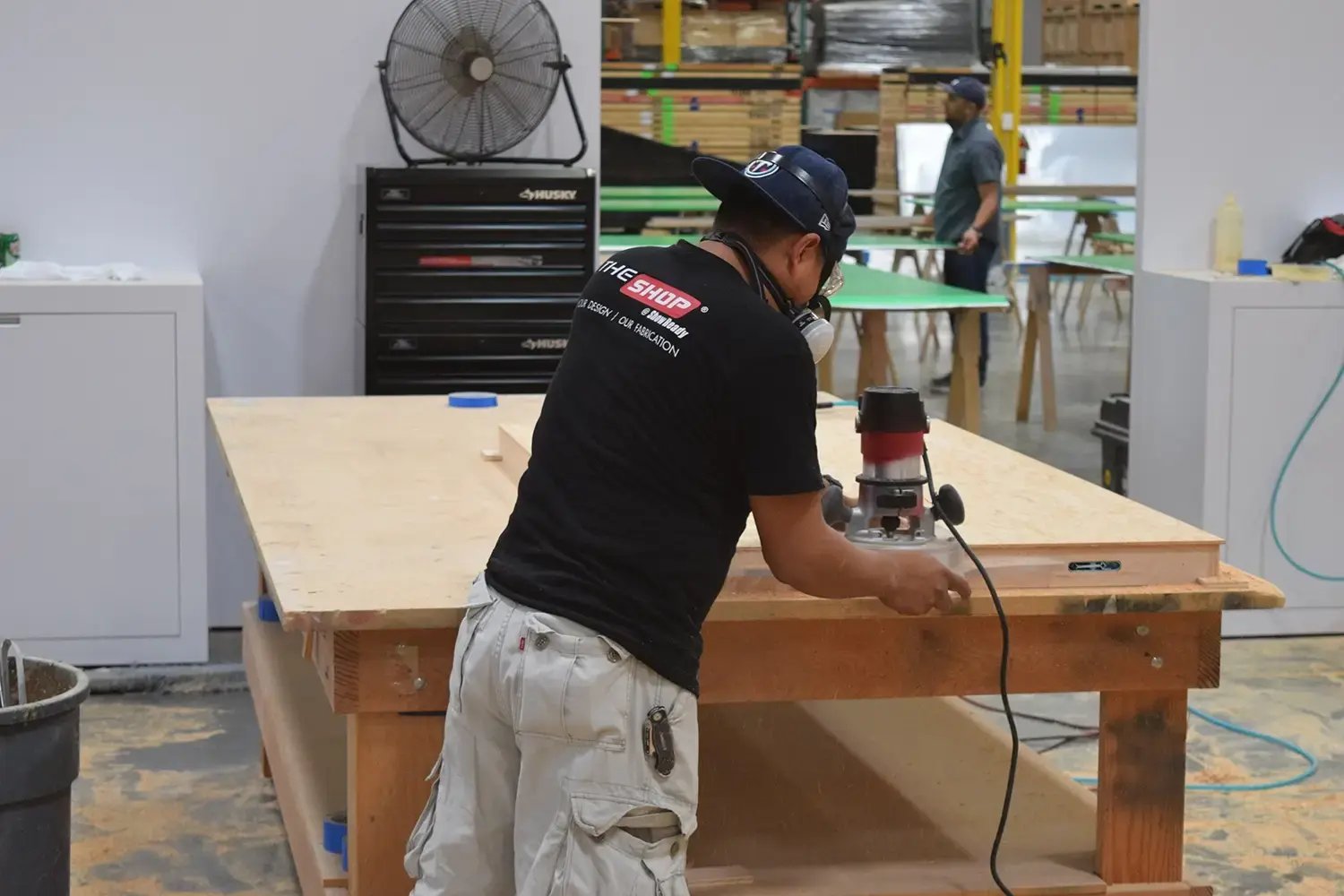
Great fabricators engineer with the show floor in mind. They size sections for common door and elevator clearances. Also, they build knock-down frames with repeatable connections and tether hardware so tiny parts don’t “walk away.” They cut cable paths so AV doesn’t add chaos later. They pick surfaces that take a beating and still clean up fast. Show Ready's metalwork capabilities are especially relevant when heavy structural frames need to survive repeated assembly across a multi-show tour.
They also think in sequences.
- What comes off the truck first?
- What assembles first?
- What needs power early?
- What wants the rigging team before the deck team?
These details save hours. They also protect finishes and fingers.
Design for logistics is quiet. You only notice it when it’s missing.
Crate Strategy: Where Budgets Are Won
Crates aren’t boxes. They’re insurance policies.
The right partner designs custom crates that blend protection and speed.
- Foam-in-place or form-fit cavities cradle fragile scenic and AV.
- Lift points and caster bases keep the crew safe and fast. Labels go on six sides.
- Piece IDs are large and readable.
- Weights are accurate.
The pack order mirrors the install order. Open Crate 1 and build Zone A. Then Crate 2 and build Zone B. No treasure hunt.
Smart crates also include spares and touch-up kits right where you need them. A missing hinge or a scuffed corner should be a two-minute fix, not a two-hour panic when you have the right tools ready.
A poor design consumes time and can prove costly. A good crate design pays for itself.
.webp?width=1500&height=1125&name=SR-Branded-Crate-%201500px001%20(1).webp)
“Advance Warehouse” Vs. “Direct To Show”: Choose Wisely
You usually face two shipping paths
Advance Warehouse
With an advanced warehouse, you ship to a local warehouse days or weeks ahead. Freight is checked, staged, and delivered during move-in. With such a situation, you often gain earlier access and fewer dock surprises, but you must hit the intake window. You also need everything skidded or crated to spec. Early or late? Expect surcharges.
Direct to Show
Your carrier checks into the marshalling yard and waits for a dock call at your target time. You can save storage fees. It works well for pad-wrapped items and tight schedules. But wait times are common. Miss your target and costs can rise. Crew timing becomes a balancing act.
A good fabrication partner helps you choose. They weigh crate style, distance, target windows, and risk tolerance. Then they recommend the route with the fewest surprises for this booth and this show.
Labels, Manifests, And “Open Me First”
Documentation turns a hard morning into a smooth one.
Expect a complete piece list with dimensions and weights. Expect crate maps that show what’s inside and where it installs. Expect bold “Open First” labels for the crate that holds fasteners, plans, power strips, touch-up paint, expendables, and tools. Expect return packing instructions that match how it shipped.
Your carrier and the show contractor need accurate counts, weights, and contact info. Your team needs target move-in times, dock addresses, and marshalling yard rules. Remember, a good partner provides all of it, in plain language, and sends it to every lead, not just one inbox.
Coordinating With The Marshalling Yard
Most large shows route freight through a marshalling yard. Drivers check in. They get a number. They wait to be called to the dock. It keeps streets clear and docks organized. Also, it means wait time is part of the plan.
Build that time into your crew schedule. Share updates with your install lead to keep them up to date. Keep bills of lading clean and ready. If the driver loses a spot over bad paperwork, you lose hours you can’t buy back which can impact your bottom line.
When your fabrication partner books or coordinates freight, they stay close to these calls. When they don’t book it, they still track it. Communication is everything on move-in day.
.webp?width=1500&height=1000&name=ebay-live-shop-showfloor-%201500px001%20(1).webp)
Onsite Install: Why Fabrication Experience Matters On The Floor
Install crews live and die by how a booth was built and packed. Every little thing matters.
You’ll feel great fabrication in the first hour when you see and experience it. Parts are labeled and only fit one way. Fasteners match the tools on site. Panels align without wrestling. Scenic routes power cleanly and safely. Elevations match reality. The lead can split teams confidently. One group builds the deck. One group wires the tower. Another handles graphics. No one stands around waiting.
That’s how you stay in straight-time labor. It’s also how your people finish with energy instead of exhaustion.
Outdoor Or International? Extra Logistics, Extra Planning
Outdoor activations add weather and security. You’ll need weighted bases or anchors to stand up to wind or whatever else Mother Nature throws at you. You’ll need sealed finishes to stand up to rain or sleet. You may need cable ramps, fence lines, or overnight guards. Bring spares for wind, sun, and rain. Your partner should design for exposure and pack for it too.
International shows add customs, carnets, and local rules. Crate wood may need ISPM-15 stamps. Paperwork must be perfect. Local labor rules can shift who can do what and when. The right partner has either done it before or brings in a specialist who has. Either way, they plan the path and explain it in clear steps so everyone understands.
Reuse, Refits, And Multi-Show Programs
A strong partner designs for reuse from day one. Modular frames. Replaceable graphics. Finishes that accept touch-ups. Hardware standardized across kits. Documentation that reads like a cookbook.
If you’re running a multi-city road show, this matters even more. The best systems travel, shrink, and expand. They handle a 10×20 at one event and a 20×30 at the next. They keep brand standards tight. They keep shipping weights predictable. They also reduce storage costs and waste between shows.
Commitment to a program with one shop often beats chasing one-offs with many. You gain consistency, speed, and a shared memory of what works and what doesn’t.
Hidden Cost Traps Your Fabrication Partner Should Help You Avoid
- Late or early warehouse deliveries. Surcharges bite, so your schedule should flag intake windows in red.
- Pad-wrapped or unskidded freight to a warehouse. Make sure everything is wrapped up correctly because many warehouses reject it, which triggers reroutes and fees.
- Bad weights on paperwork. The yard will bounce you and dock crews will halt unloading if the weights don’t match. This is why accurate numbers matter.
- Late-day dock times. Your team will slide into overtime so you need to plan ahead. Book earlier when you can.
- Cheap crates. They cost more later. Plus, they’re slow to install which costs you time and money. They crush parts at strike.
- No return map. If crews guess at teardown then parts can break. This causes the next show to need a complete rebuild.
Your partner should spot these traps before you do. If they don’t, you’re carrying a risk you shouldn’t carry.
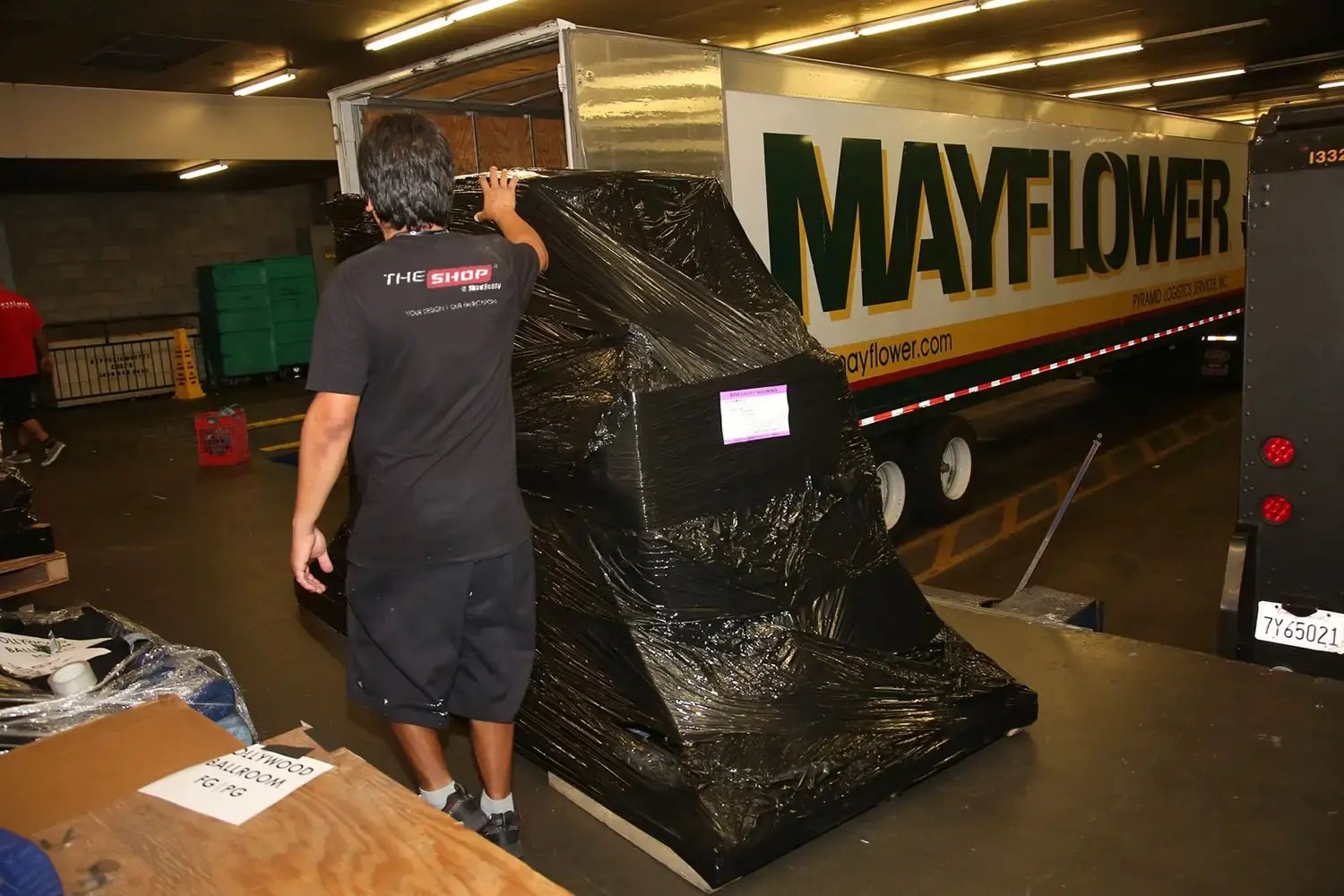
What A Great Fabrication Partner Actually Does During Logistics
It’s more than building and waving goodbye at the dock. Here’s what “great” looks like in real life.
Pre-show Collaboration
They sit with your team and review the show kit, target times, floor rules, and union notes. In addition, they work to confirm what’s sourced on site and what ships. They talk about rigging, power, and AV flows.
Carrier Coordination
They recommend carriers who know shows and what to expect. Also, they’ll confirm equipment types and access needs. Things like whether a liftgage is needed or a flatbox box will suffice. They hand carriers correct addresses, booth numbers, marshaling instructions, and contacts.
Crate Architecture
They design packs that mirror install order, protect finishes, and speed labor. The team will build travel lids that won’t snag. They add caster plates where docks are rough. They tie down loose items. They photograph interiors so re-pack is obvious and a must.
Floor-Ready Documentation
Documentation matters on the floor such as the delivering of labels, maps, and manifests, and plain-English. They deliver labels, maps, manifests, and a plain-English “Open First” guide. Also, print extras. In addition, they will put digital copies in your team’s phones.
Onsite Support
They send a lead who has built the booth before. Or they prep your I&D team with a detailed walkthrough call and notes. When an issue pops up, they solve, not shrug.
After-Show Recovery
They plan to strike, re-pack, and return. Also, they take the time to log damage. They schedule repairs and refreshes. They handle storage. They suggest small upgrades based on the wear they saw.
When your fabricator talks logistics as fluently as carpentry or scenic, the whole week feels calmer and everything works out nicely.
.webp?width=1500&height=1125&name=Mothers-Install-SEMA-SR-%201500px001%20(1).webp)
Real Questions Your Partner Should Be Asking You
- What are the show dates and targeted move-in time?
- Any union rules that affect power, rigging, or carpentry?
- Who is your install and dismantle provider? Do you want ours?
- Will this booth travel to multiple shows? How many? What footprints?
- What AV, LED, or interactive tech is included? Who owns those cases?
- Any special finishes to protect in transit?
- What is the budget ceiling for freight and drayage?
- What’s the contingency if a truck is delayed?
If you aren’t hearing these questions, ask them yourself because you need the answers. The answers shape everything so are imperative.
After The Show: Teardown, Repairs, And Storage
Great partners don’t vanish at the show’s opening. They plan for the end and are there when you need them.
- Strike maps mirror install maps.
- Color-coded labels guide re-pack.
- Damage logs capture issues before crates close.
- Refinish and repair plans start as soon as freight hits the shop.
- Storage keeps everything accessible and protected.
If the booth is part of a program, they recommend small upgrades after each outing. A stronger hinge here or there. A reinforced edge might help perhaps.. Better cable management after a tight corner. The road gets smoother show by show as improvements are carried out.
The Bottom Line
Trade show logistics is a chain. Weak links snap under pressure.The right fabrication partner strengthens every link so you don’t have to worry.
They design pieces that travel well. They pack smart. They label everything. They help you choose the right shipping path. They speak marshalling yards and target move-in fluently. They plan to install and strike, and back it up with documentation and spares.
When that happens when all of this falls into line, your show feels calm. Your crew builds instead of searches. Your managers focus on meetings, demos, and leads, not missing crates. Your budget behaves. Your brand shows up big.
Here’s the litmus test. Do they talk about logistics with the same confidence as design and fabrication? If yes, you’re in good hands. If not, keep looking. The stakes are too high to gamble.
Ready For Calmer Show Weeks?
Partner with Show Ready. We design, build, pack, and shepherd your booth from crate to show floor, on time and on budget. Get a quote.