
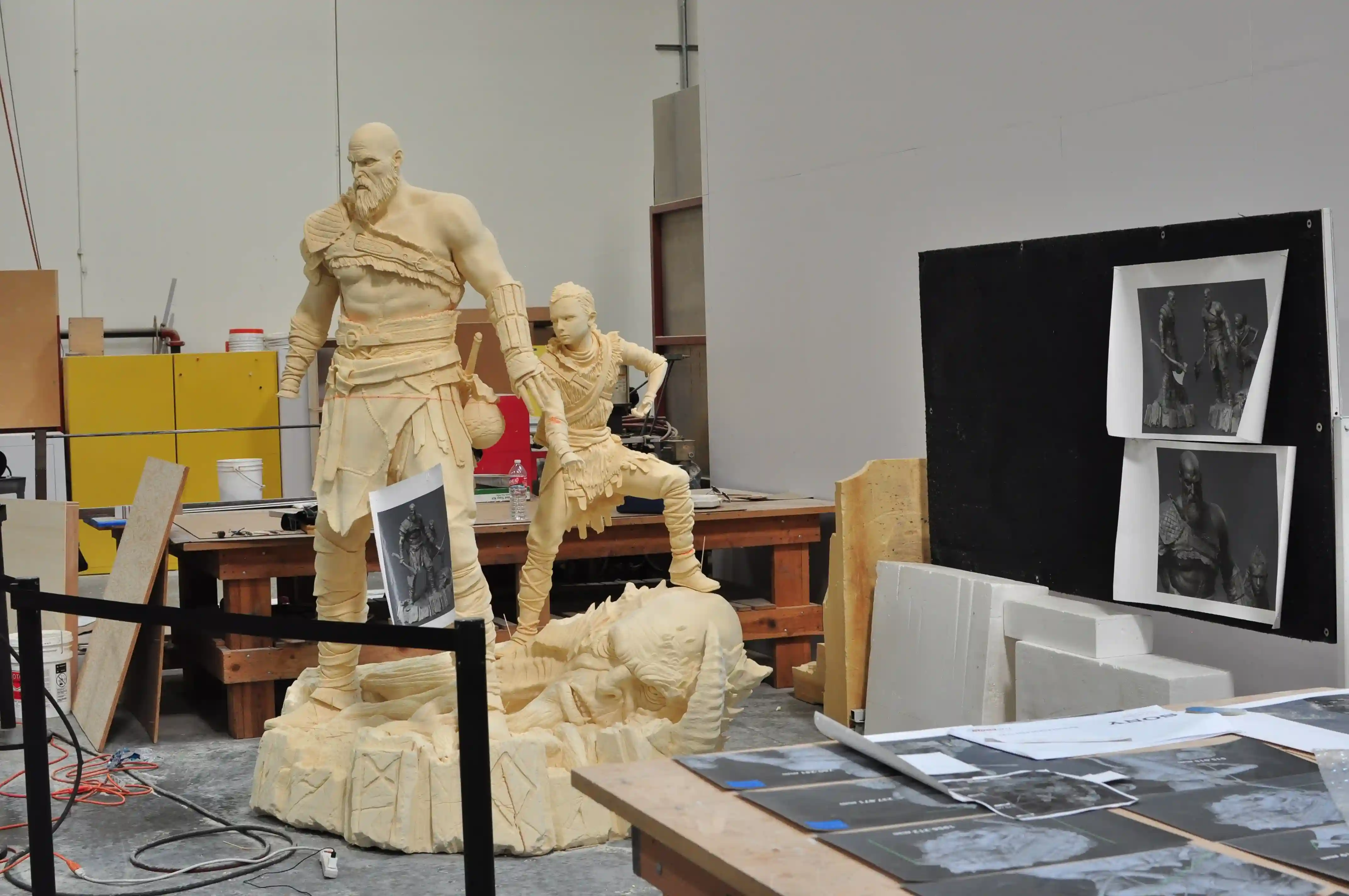
Every built environment that draws a gasp from an audience, pulls guests deeper into a story, or stops shoppers in their tracks started the same way: as an idea on paper. The art of scenic fabrication is the discipline that turns those ideas into real, walkable, performable worlds.
Key Takeaways
- Scenic fabrication is the process of transforming a big idea into a finished physical environment for theater productions, theme parks, museums, live events, and brand experiences. It involves carpentry, metalwork, sculpting, digital fabrication, scenic painting, and programmable automation, all working together to create memorable experiences that hold up under real-world conditions.
- Every successful scenic fabrication project depends on close collaboration between the creative team, production designers, engineers, and the fabrication team. Bringing fabricators in early, during concept development rather than after designs are locked, prevents costly redesigns and protects both the creative vision and the budget.
- The scope of modern scenic fabrication extends well beyond traditional stage design. Today's scenic fabricators deliver complex, immersive environments for Broadway theater productions, 21st-century theme parks, seasonal experiences such as Halloween events, touring exhibitions, museum exhibits, retail flagships, and broadcast studios.
- Choosing the right scenic fabrication partner means evaluating technical expertise, in-house capabilities across trades, safety records, and a portfolio of recent work at the scale your project demands.
What Is Scenic Fabrication Today?
Scenic fabrication is the process of turning scenic design and stage design concepts into physical environments for performance, themed entertainment, museums, retail, film, and broadcast studios. It transforms conceptual designs into tangible environments where audiences can suspend disbelief, absorb a narrative, and walk away with lasting impressions.
Historically, the craft evolved alongside theater itself. The New Stagecraft Movement began in the early 20th century, pushing designers to think about space, light, and form rather than painted backdrops alone. American designers moved away from detailed naturalism in the 1900s, and poetic realism was defined by designers like Jo Mielziner, whose approach to layered space and translucent scenery reshaped how stories were told on stage. Scenic design varies significantly across different cultures, but the common thread is the transformation of empty space into narrative.
Today, scenic fabrication prioritizes the artistic illusion of a space over functional structure alone. Modern trends emphasize spectacle and mechanized scenery, and the entertainment industry is the largest market for scenic fabrication.
Here is what the discipline looks like in practice:
- Trades and techniques. The process involves carpentry, sculpting, and digital fabrication techniques. Scenic fabrication uses wood, metal, plastics, and foam, plus composites, resins, and specialized coatings. CAD tools revolutionized scenic design by enabling precise drawings, and CNC machining, 3D printing, and robotic milling have expanded what is possible in the shop.
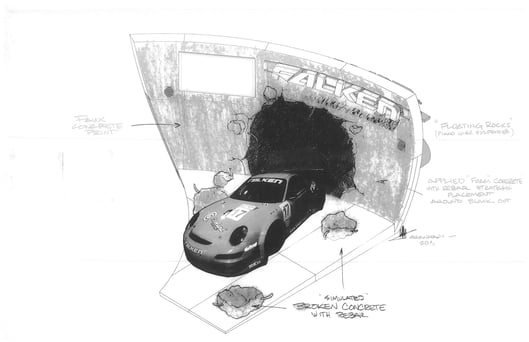
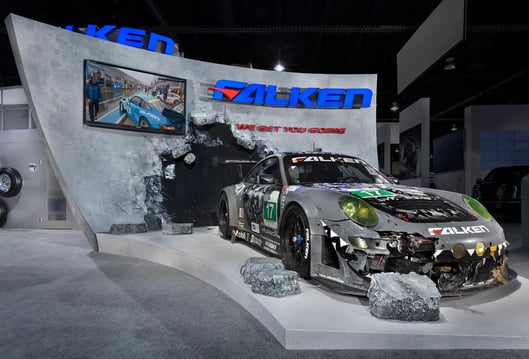
- Scale. Projects range from a single scenic element for a corporate keynote or trade show booth like the dual rock and sleek steel walls of Falken Tires, to entire themed lands covering over 300,000 square feet, as in Universal Orlando's Volcano Bay, which included over 150,000 square feet of hand-carved rockwork delivered within a 12-month schedule.
- Integration. Modern scenic fabrication goes beyond static scenery. The 2026 Broadway revival of Frozen incorporated a 12-meter by 9-meter LED wall, 16 laser projectors, and 64 axes of automation to coordinate media, motion, and environmental effects in real time. Automation and motion control are often included in modern scenic designs at this level.
- Durability and safety. Fabricators interpret designer drawings, models, and intent, then engineer solutions that can withstand daily performance schedules, guest traffic, UV exposure, moisture, and fire code requirements. Key techniques in scenic fabrication focus on lightweight construction and safety.
Scenic fabrication combines artistry with technical expertise through teamwork, whether the project is a Broadway set, a 200,000-square-foot theme park land, or a traveling museum exhibit.
From Big Idea to Build: Concept Development and Scenic Design
Every project starts with a big idea. It might be a single sentence scrawled on a napkin, a written treatment for an immersive experience, or a pitch deck from a brand team. Concept development is the phase where scenic fabricators add the most long-term value, because the decisions made here ripple through every downstream trade, timeline, and budget line.
The scenic fabrication process includes concept development and design collaboration from the outset. Our scenic design and concept teams help clients move from an initial sketch or pitch to a visual language: mood boards, color palettes, early 3D studies, and narrative treatments that define how the audience will move through the space and what emotional beats they will hit.
Effective scenic fabrication relies on comprehensive planning and collaboration with designers. This means involving lighting, audio, interactive, and maintenance teams early, not after the design is locked. Collaboration ensures scenic elements fit the overall creative vision and that technical realities do not become surprises later.
Here is what early-stage collaboration looks like on a real project:
- Story and guest flow. For an immersive experience like Masquerade, the Immersive Phantom of the Opera Experience, the production designer worked through multi-path audience journeys, decided on the scale of key scenic moments (a chandelier larger than the Broadway version), and mapped how the set serves the storytelling before any steel was ordered.
- Visual studies and 3D mock-ups. On the Frozen revival, the creative team conceived how the Aurora Borealis effect would be controlled in real time, how projection mapping would wrap scenic forms, and how scenic surfaces would double as projection walls or LED surfaces. Those art direction decisions made during concept development defined the entire technical design phase.
- Cross-discipline coordination. Developing a touring immersive art exhibit from a single written treatment, or shaping the design language for a new park entry plaza, requires creative directors, show writers, and the fabrication team to lock in sightlines, mechanical clearances, and guest safety before heavy engineering begins.
Early involvement of the fabrication team does not slow the design process. It accelerates it by eliminating ideas that cannot be built and surfacing better solutions while changes are still inexpensive.
Technical Design: Engineering the Illusion
Technical design is the bridge between the artistic model and the shop drawings that can actually be fabricated, installed, and maintained. It is where creative concepts become construction documents.
We translate scenic design into detailed construction drawings, CAD and BIM models, and engineering calculations that address structural loads, rigging points, dynamic forces, and life safety. Rigging requires strict adherence to theater safety standards, and every overhead or performer-carrying element undergoes documented load testing before it leaves the shop.
Here is what the technical design phase involves:
- 3D modeling and CNC tool pathing. We use 3D CAD modeling to represent structural frames, show infrastructure, load paths, and integration of services such as HVAC, sprinkler, lighting, and audio. CNC machines create precisely engineered components for installations, and tool paths are generated directly from the model to ensure accuracy in cutting foam, wood, and composites.
- Previsualization. On complex shows, previsualization and digital mock-ups let teams test visual impact, lighting, scenic flow, and technical interference before fabrication begins..
- Venue constraints. Coordination with venue constraints is critical: fly tower capacity and grid clearances in historic theaters, sprinkler and HVAC coordination in museums, weather exposure and soil load for outdoor theme park sets, and global venue variation for touring scenery. Early coordination with structural engineers, building code authorities, and venue operations teams avoids field conflicts.
- Touring logistics. For touring shows, technical design must account for modularity, quick load and unload, travel weight limitations, truck packing, and assembly time. Fabricators ensure that large set pieces are lightweight, modular, and easy to transport. Scenic fabrication techniques enable quick scene changes in live theater, and those same principles govern how we design touring packages that a crew can assemble in a matter of hours.
- Technology integration. Scenic designers integrate technology by embedding lighting and interactive elements into sets. The interface protocols (DMX, Art-Net, EtherCAT) that connect media servers, motion systems, and show control are specified and tested at this stage.
Technical design is where the illusion becomes engineerable. Without it, you have a beautiful rendering. With it, you have a buildable, maintainable, safe environment.
Custom Fabrication: Craft, Materials, and Methods
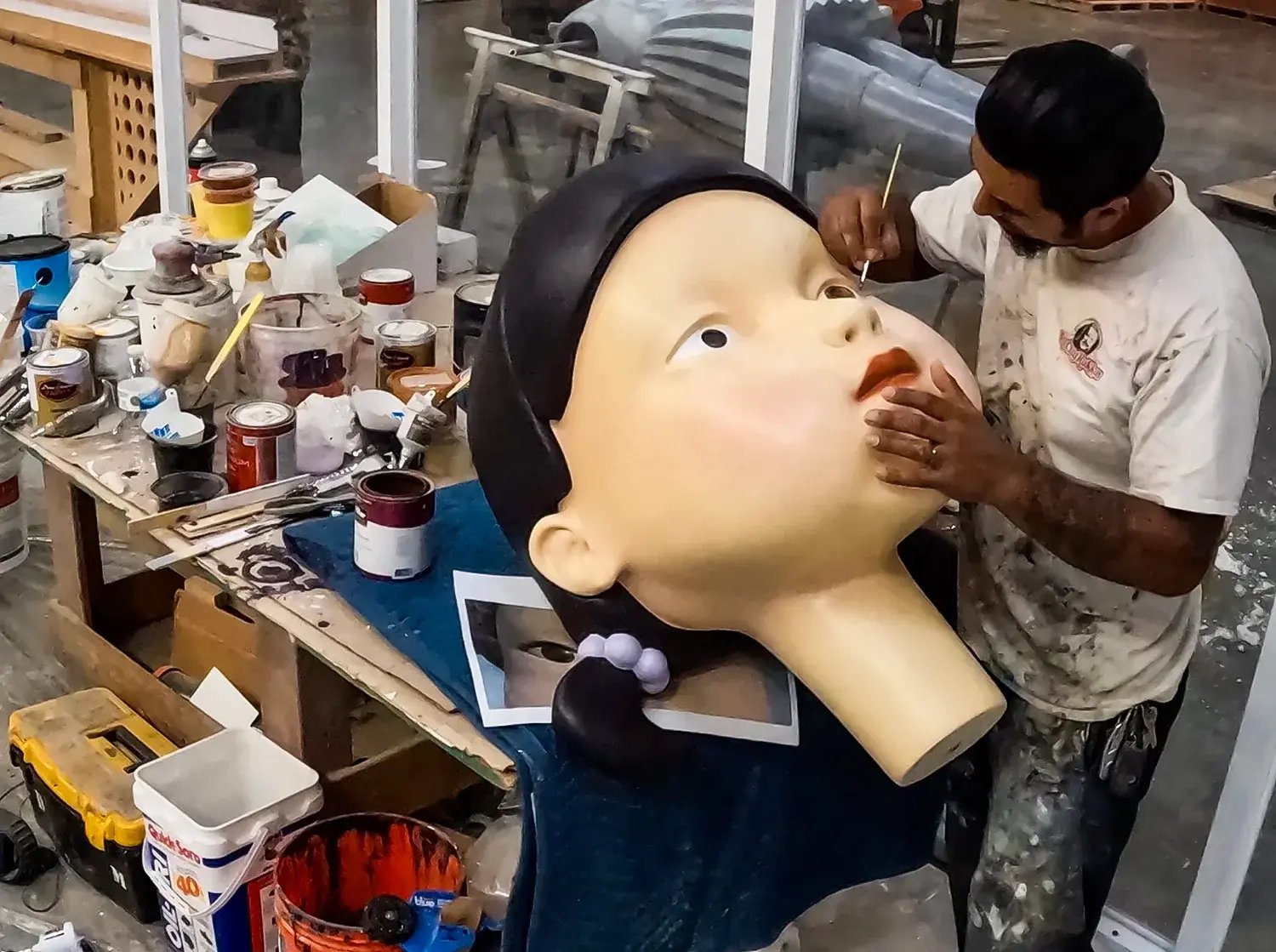
Custom fabrication is the hands-on phase where materials, tools, and skilled artisans give form to the approved design package. This is where the shop floor comes alive and the design transitions from screen to structure.
The primary trades involved include:
- Carpentry and millwork for structural framing, platforms, and architectural detail
- Scenic metalwork, including welding, forming, and finishing techniques for steel and aluminum structures
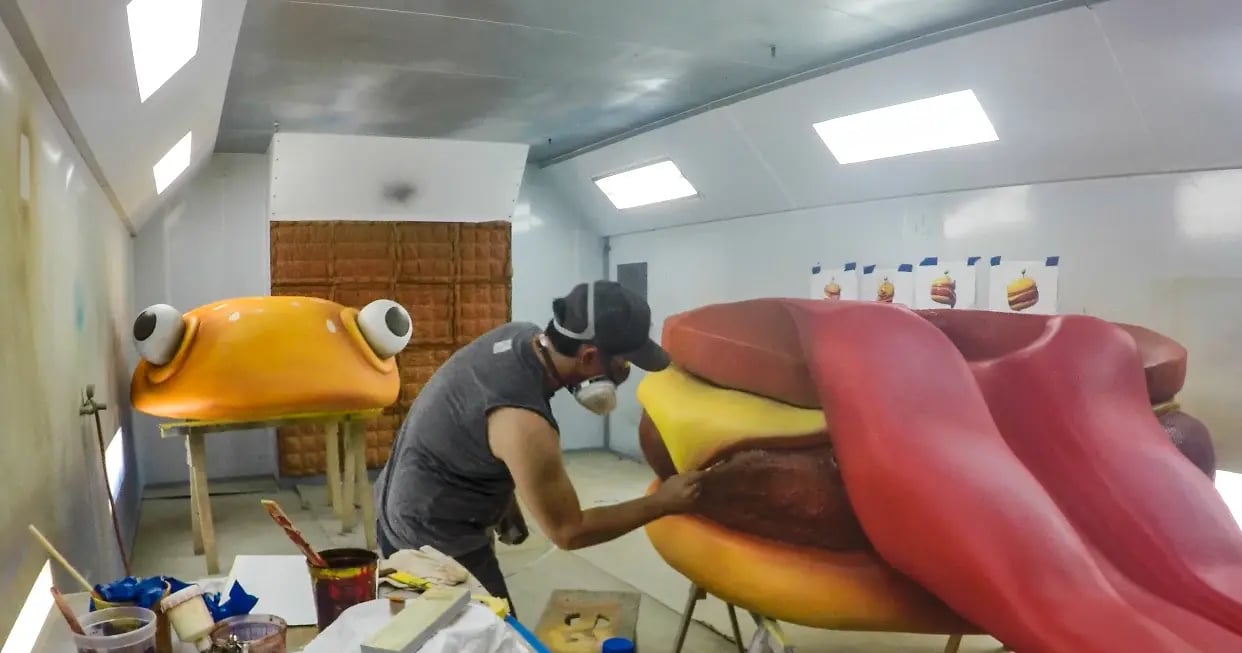
- Sculpting in foam (polystyrene, urethane) for rockwork, trees, and organic forms
- Composites and fiberglass for tough, lightweight, weather-resistant skins; fiberglass is used for weather-resistant outdoor installations
- Scenic painting and faux finishes for texture, aging, distressing, and bold graphic work
- Graphics and signage
- Integration of lighting and show control hardware, including automation, animatronics, and interactive displays
Material selection balances aesthetic requirements and structural needs. Fabricators adapt materials and methods to meet creative goals, and the best materials for a project depend on the operating environment:
| Environment | Typical Materials | Key Considerations |
|---|---|---|
| Theater (indoor) | Fire-retardant scenic fabrics, lightweight plywood, steel framing | All scenic materials must comply with fire codes to be flame-retardant or treated |
| Theme park (outdoor) | GFRC, fiberglass, UV-stable coatings, structural steel | UV degradation, moisture, freeze-thaw, guest contact |
| Touring scenery | Aluminum framing, road-case packaging, modular panels | Weight limits, assembly speed, transport durability |
| Museum exhibit | Conservation-grade finishes, low-VOC paints, interactive hardware | Environmental control, visitor safety, code compliance |
Metal fabrication includes welding, forming, and finishing techniques that produce everything from structural portals to decorative railings. For outdoor applications, animatronic skin materials illustrate the cost-versus-lifespan trade-off clearly: PVC skins cost roughly $50 to $120 per square meter with a 2 to 3 year outdoor lifespan, while silicone rubber runs $200 to $400 per square meter but lasts 5 to 8 years or more, even in harsh UV and climate conditions.
Scenic fabrication combines artistry with technical expertise through teamwork. The problem-solving mindset of experienced fabricators shows up most clearly when a design calls for something that has never been built before. That might be a 12-meter steel show portal for an arena tour, a canopy of sculpted faux trees for a new theme park land, or a kinetic chandelier that flies, rotates, and lights up on cue.
In each case, the team works backward from the creative vision to find the construction method, the right other materials, and the finish that will deliver the visual impact and durability the project demands.
Applications Across Entertainment and Branded Environments
Scenic fabrication supports many industries that rely on storytelling and guest experience, not only traditional theater. The common thread is creating environments that pull people into a narrative, whether they are seated in an auditorium, walking through a themed queue, or browsing a flagship store.
Theater productions
We build proscenium sets, automated deck units, and touring packages for regional theaters and Broadway houses. Scenic fabrication supports the physical actions of performers by focusing on safety standards, ensuring that every platform, staircase, and flying piece can handle the demands of live performance night after night. Scenic fabrication techniques enable quick scene changes in live theater, which is an essential component of productions that run eight shows a week.
Theme parks and location-based entertainment
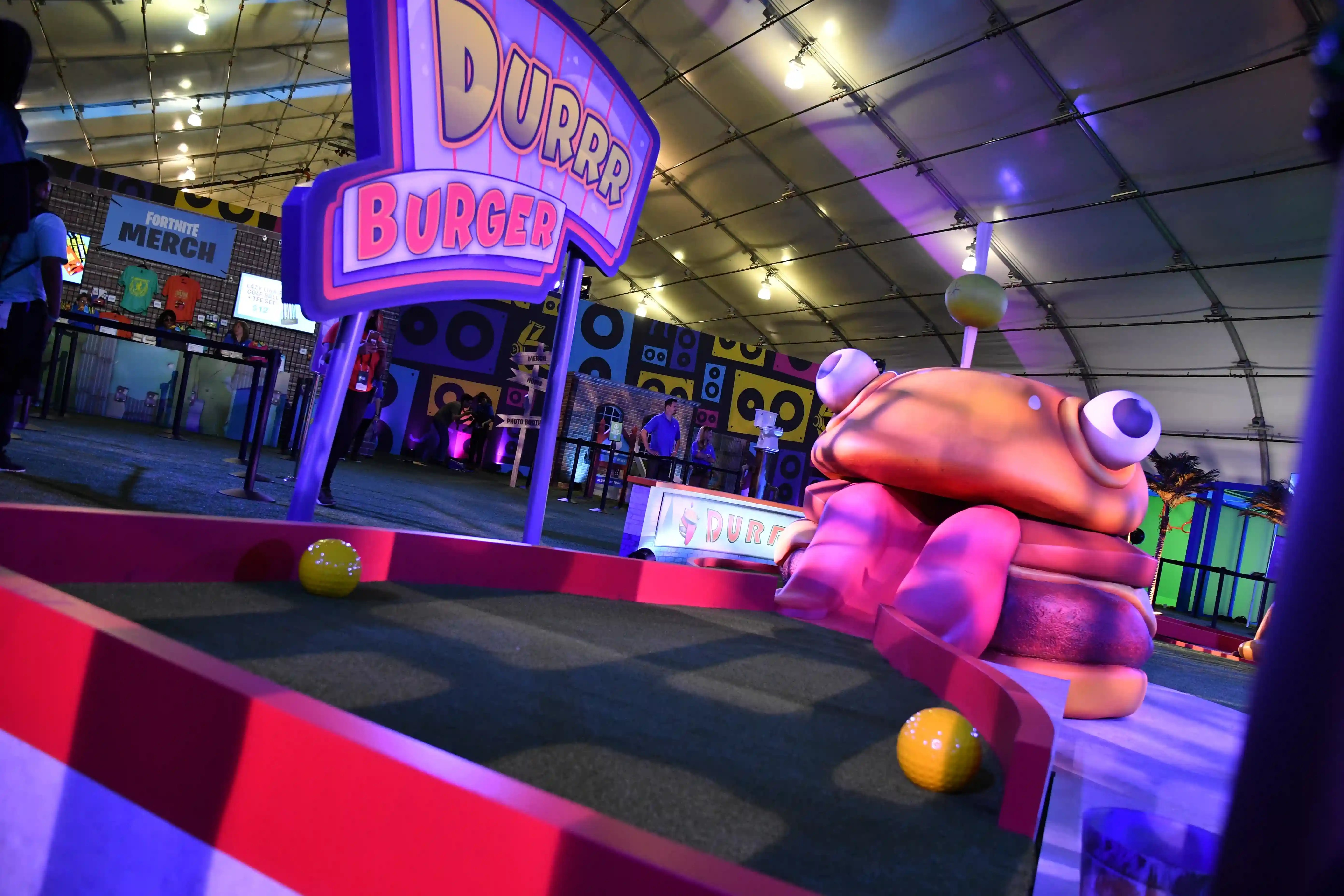
Theme parks require installations that withstand thousands of visitors daily. Our work in this sector includes ride queues, show sets, parade floats, haunted mazes, and seasonal overlays for major North American parks. At Volcano Bay, the design/build team delivered over 300,000 square feet of immersive environmental fabrication, including sculpted rockwork, waterfalls, and guest pathways, all engineered for years of daily operation and Florida weather.
Brand and retail
Retail environments use scenic fabrication to enhance customer engagement. Pop-up stores, flagship window campaigns, and trade show environments demand fast installation, high visual impact, and durable finishes. Companies like JK2 Scenic build retail fixtures and themed props that combine branding with immersive theming in public-facing spaces. These brand experiences are often on tight timelines, with install windows measured in days rather than weeks.
Cultural and educational projects
Museum exhibits often recreate historical environments for educational purposes, transporting visitors to a specific time period through detailed scenic construction, interactive displays, and carefully selected finishes. Traveling exhibits must fit varying venues while preserving conservation requirements and meeting strict flame spread ratings per ANSI, NFPA, and institutional standards. A museum exhibit can be as complex as any theme park attraction, with the added constraint of protecting artifacts and meeting environmental controls.
Cruise ships and other specialty venues
Cruise ship installations must meet strict maritime safety standards, adding another layer of engineering and compliance to scenic fabrication. Film and broadcast studios round out the list, where set design and scenery support the storytelling needs of camera-based production.
Collaboration, Workflow, and Project Management
Scenic fabrication succeeds when communication is clear and the workflow is structured from day one. No amount of craftsmanship in the shop can fix a broken process upstream.
Scenic fabrication involves collaboration among designers, engineers, and artisans at every stage. Here is how we structure that collaboration:
Typical project stages
- Discovery. Define the vision, story, program, audience, and budget range.
- Concept development. Visual studies, mood boards, early 3D models, narrative treatments.
- Scenic and technical design. Engineering, shop drawings, safety review, code compliance.
- Prototyping. Material samples, paint drawdowns, scale models, full mock-ups of critical scenic or motion systems.
- Fabrication. In-shop construction, painting, integration of technology and show control.
- Shop previews. Client walk-throughs to verify sightlines, finish quality, and mechanical performance.
- Logistics and installation. Shipping, site prep, assembly, alignment.
- Commissioning. Final testing, punch list, handoff to operations.
Project managers coordinate timelines and multiple trades in scenic fabrication, keeping the schedule honest and the budget visible. On a 9-month schedule for a new park attraction, the difference between an on-time opening and a delayed one often comes down to how well the team managed checkpoints 3 through 5.
Client involvement at key checkpoints
We involve clients in approving scale models, finish sample boards, and full mock-ups to avoid surprises in the field. For a 6-week sprint building a set for a live TV special, those checkpoints compress but they do not disappear. The earlier we communicate material options, finish quality, and cost trade-offs, the fewer field changes we face.
Schedule and budget control
Budget and timeline constraints are facts of life on every scenic fabrication project. Early value engineering, such as substituting lightweight foam and composite skin instead of stone, or using aluminum instead of steel to reduce weight, protects the design intent without compromising safety or guest experience. Quality control testing ensures structural components meet safety requirements before elements leave the shop. Changing steel or structural design late is exponentially more expensive than adjusting during technical design, which is why we push for early design freezes on structure while keeping finish options flexible longer.
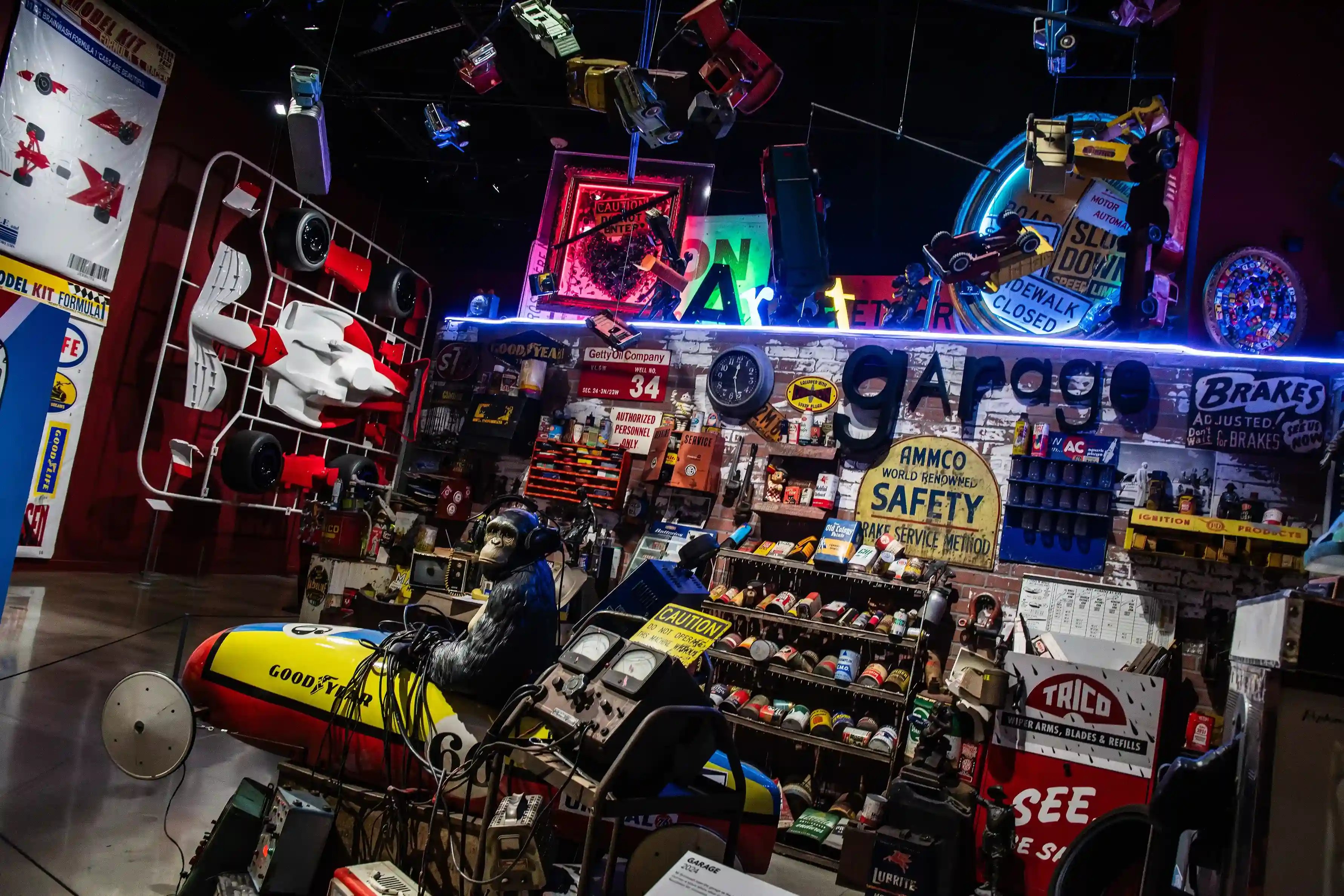
Choosing a Scenic Fabrication Partner
The right partner will handle both creative nuance and heavy technical requirements, especially on multi-year or multi-venue projects. Scenic fabricators who can manage concept development, custom fabrication, installation, and long-term maintenance under one roof eliminate the coordination gaps that cause delays and cost overruns.
Here are the criteria we recommend evaluating:
- In-house capabilities. Look for a partner with scenic design, technical design, engineering (structural, mechanical, motion control), metalwork, composites, painting, and show control all under one roof. Companies with large fabrication facilities, such as Scenario's 59,000-square-foot Orlando shop and 77,000-square-foot facility in Asia, can support global projects at scale.
- Track record. Ask for case studies from projects completed between 2019 and 2026 that match your scale and complexity. A partner who has delivered both Broadway theater productions and permanent theme park installations understands the different demands of each.
- Safety and compliance. Review safety records, insurance, code compliance documentation, certified welders, rated rigging hardware, and load testing reports. The ability to maintain safety standards is non-negotiable and should be demonstrated, not just claimed.
- Technology integration. Modern scenic fabrication increasingly requires motion control expertise, media server integration, and real-time show control. Partners should be fluent in tools like Spikemark, Exato, and media server platforms.
- Maintenance and refresh. Permanent installations need planned refresh cycles. Ask how the partner handles finish touch-ups, technology upgrades, and modular repair over the life of the installation.
The goal is to find a team that can bring decades of experience to your project, collaborate with your creative team, and deliver an environment that achieves its creative goals on schedule and on budget.
Frequent Scenic Fabrication Questions
How early should we bring a scenic fabrication team into a project?
Involving fabricators at the big idea or earliest concept development stage prevents costly redesigns and improves buildability. For major theme park attractions, this often means 9 to 18 months before opening. For smaller theater productions or seasonal events, a 3 to 6 month lead time is typical, depending on complexity and touring requirements. Early collaboration lets the team advise on materials, mechanics, and venue constraints before designs are locked, and it gives production designers and the creative team time to iterate without burning schedule.
What information do you need to provide an initial budget and schedule?
At a minimum, we need preliminary scenic design sketches or renderings, venue plans (or at least venue dimensions and access), a target opening date, the operating schedule (how many shows per week or hours of daily operation), and any specific performance or safety requirements. Even rough story outlines or reference images are helpful at the earliest stage, as long as the client can define audience, goals, and budget range. We recommend that clients share examples of projects they admire, such as well-known theme park attractions or recent Broadway shows, to help calibrate scale, finish level, and expectations.
Can scenic fabrication support touring shows and temporary installations?
Absolutely. Touring theater productions, arena concerts, exhibitions, and brand activations are a core part of modern scenic fabrication work. Touring scenery is engineered to pack efficiently into trucks or containers, assemble quickly in multiple venues, and withstand frequent load-ins and load-outs. Specific considerations include modular framing, hardware standardization, protective road cases for fragile scenic elements, and weight management. Sometimes finish durability is intentionally traded for weight savings, with refresh cycles planned for every tour leg or season. The construction approach is different from a permanent installation, but the creative goals and visual impact remain just as high.
How do you handle safety and code compliance in scenic environments?
Scenic fabricators work closely with structural engineers, safety consultants, and local authorities to comply with building codes, fire regulations, and entertainment industry standards. All scenic materials must comply with fire codes to be flame-retardant or treated. We use rated rigging hardware and perform documented load testing for overhead or performer-carrying elements. Safety reviews are integrated into technical design, shop fabrication, and on-site installation, not treated as a last step. Quality control testing ensures structural components meet safety requirements at every stage of the process.
What is the typical lifespan of scenic fabrication in theme parks versus theaters?
Permanent theme park installations are usually designed for 10 to 20 years of operation with planned refresh cycles for finishes, graphics, and show technology, often every 5 years or less. Theater productions, by contrast, may be built for a limited run of months or a few years. Touring sets must balance durability with weight and transport limits. Regular maintenance, inspections, and occasional re-fabrication of high-wear scenic elements extend the life of both park and theater scenery. Premium finish materials and UV-stable coatings cost more upfront but significantly reduce long-term maintenance costs for outdoor environments.