
Key Takeaways
- Launch day is no longer the peak of the fan journey. Modern games generate the majority of revenue through post-launch engagement, with live services accounting for over 73% of net revenue at major publishers like EA.
- Studios that design continuous fan experiences spanning discovery, anticipation, play, community, and nostalgia build deeper fan loyalty and unlock new revenue streams that last years, not weeks.
- Combining digital experiences, physical installations, community co-creation, and cross-media storytelling keeps fans engaged far beyond the game client itself.
- Show Ready is the go-to experiential partner for translating game worlds into immersive real-world environments, offering in-house CAD engineering, fabrication, scenic design, and graphics under one roof.
- The most successful studios in 2026 treat launch day as the starting line of a multi-year relationship with their audience, not the finish.
From Launch Day Spike to Lifelong Fan Journey
The video game industry looked very different fifteen years ago. Studios shipped a boxed product, ran a launch campaign, and moved on to the next project. Revenue spiked on day one and declined from there. That model is gone.
By 2026, the gaming industry runs on living ecosystems. Fortnite earned $1.2 billion in its first 10 months, then kept growing through years of seasons, collaborations, and in-game concerts. Genshin Impact launched in 2020 and still commands a massive global player base through regular story updates and character banners. Baldur's Gate 3 earned critical acclaim in 2023 and extended its life through modding support and director's cut content.
Creating lasting fan experiences requires cultivating a living ecosystem rather than shipping a one-time product. Games transform audiences into active participants in the story, and the fan journey now stretches across discovery, anticipation, play, expansion, community, and nostalgia. This shift mirrors what the sports industry went through in the 2010s, when every professional sports organization learned that engagement beyond the arena drives more value than game day alone.
The central idea is simple: studios now compete on fan experience quality and longevity. This article breaks down exactly how to design that experience, measure it, and bring it to life with the right partner. Show Ready works behind the scenes to help publishers and IP holders turn digital worlds into tangible, immersive environments that fans remember for years.
Why Launch Day Is Just One Moment in the Fan Experience
Modern launches follow multi-year hype cycles. Cyberpunk 2077 was announced in 2012, launched in 2020 to mixed reception, then rebounded dramatically with its 2023 Phantom Liberty expansion and the Edgerunners anime. The game's engagement curve looked nothing like a traditional launch spike. It had peaks and valleys spread across a decade.
Think of the engagement curve as a series of waves: pre-announcement buzz, reveal events and trailers, beta tests, the launch peak, a post-launch trough, and then a long tail of engagement driven by updates, live events, and cultural moments. Revenue sources now span preorders, battle passes, seasonal content, merchandise sales, esports, and in-person activations. Games can generate income through multiple models rather than relying on a single unit-sales spike.
Studios must architect fan experiences that operate well beyond game day, similar to how professional sports franchises program their venue year-round. The average lifetime value of a fan runs into the tens of thousands when you account for digital purchases, event attendance, merchandise, and community participation over multiple years. Immersive experiences can create new revenue streams for brands that commit to the long game.
Here is how the old model compares to the new reality:
|
Dimension |
Old Model (Launch-Focused) |
New Model (Lifecycle-Focused) |
|
Revenue concentration |
Mostly upfront full game sales |
Steady earnings from battle passes, expansions, in-game purchases, merch |
|
Fan activation timeline |
Pre-launch campaign, launch week, fade-out |
Continuous cycle from pre-announcement through nostalgia phases |
|
Community expectations |
Ship the game, maybe one patch or expansion |
Regular seasonal content, live events, narrative arcs, ongoing updates |
|
Marketing style |
Big blockbuster push, one-time spend |
Always-on engagement, hybrid digital and physical storytelling |
|
Success metrics |
Units sold, launch week revenue |
Retention cohorts, DAU/MAU, event participation, cross-media reach |
EA's FY2024 financials illustrate this vividly: live services contributed $5.547 billion of their $7.562 billion in net revenue, dwarfing the $2.015 billion from full-game sales.
The New Era of Continuous Fan Engagement
Continuous fan engagement is an intentional strategy to offer fans reasons to return weekly or monthly across digital channels, events, and content formats. It is not a marketing afterthought. It is a product decision.
Apex Legends has delivered seasonal drops since 2019, each with new legends, maps, battle passes, and lore. Destiny 2's Year 6 included four seasons plus yearly expansions, with Season of the Wish extending to 27 weeks when the next expansion was delayed. That flexibility showed that players stay engaged when they know a game has an active future. Content roadmaps give fans anticipation for future updates.
Continuous content updates enhance player engagement post-launch. Live-service updates and seasonal content keep gameplay fresh, and successful games expand existing narratives rather than repeat them. Esports ecosystems enhance competitive player investment, and with esports revenue projected to surpass $1 billion this year, the competitive layer adds another dimension to the fan journey.
Player expectations have been shaped by social media, streaming, and always-on content. Just as professional sports fans expect year-round storylines and off-season drama, gamers now expect the same from their favorite titles.
Fan experience teams must collaborate closely with game development, marketing, licensing, and live-ops. Here is how the old campaign model compares to always-on engagement:
|
Attribute |
One-Off Marketing Campaigns |
Always-On Fan Engagement Programs |
|
Duration |
4 to 8 weeks around launch |
52 weeks per year, multi-year |
|
Content cadence |
Trailer, press tour, launch ads |
Weekly social content, monthly updates, seasonal events |
|
Team structure |
Marketing runs independently |
Cross-functional: dev, marketing, community, live-ops, experiential |
|
Fan relationship |
Transactional (buy the game) |
Ongoing (play, watch, attend, create, share) |
|
Measurement |
Impressions, units sold |
Retention, event participation, community health, lifetime value |
Mapping the Fan Journey Around a Video Game
The fan journey is not linear. It is a cycle that players enter and re-enter at different stages depending on their level of investment and the content available to them.
Here is a framework tailored to games:
|
Stage |
What Fans Feel and Expect |
Example Touchpoints |
|
Discovery |
Curiosity, first impressions |
Announcements, teasers, influencer previews, social media buzz |
|
Anticipation |
Growing excitement, commitment signals |
Closed betas, early access, livestream countdowns, reveal events |
|
Launch and Onboarding |
First play, initial reactions |
Launch streams, tutorials, onboarding rewards, community welcome |
|
Expansion |
Hunger for more content |
Seasons, updates, new modes, live events, expansions |
|
Mastery and Community |
Skill growth, social belonging |
Esports, community challenges, UGC, Discord, forums |
|
Nostalgia and Return |
Reengagement through memory and legacy |
Anniversary events, remasters, concert revivals, merchandise |
Fans expect personalized experiences tailored to their preferences. Personalized experiences are crucial for modern fan engagement, and different segments enter the journey at different points. Hardcore players demand lore depth, competitive modes, and rare cosmetics.
Casual mobile gamers might engage primarily around seasonal events and accessible rewards. Lapsed fans respond to nostalgia events, expansion catch-up mechanics, and cross-media exposure. The fan experience begins long before a player presses start playing, and it continues long after they put the controller down.
Designing Digital Experiences That Go Beyond the Game Client
Digital experiences extend the universe beyond the game executable. They include web hubs, companion apps, AR filters, social campaigns, and interactive storytelling platforms that deepen the connection between fan and world.
- Riot Games built extensive lore websites for League of Legends that let fans explore untold stories interactively, building emotional connection with characters outside of gameplay.
- Diablo IV's pre-launch "Hell's Ink" tattoo tour included a digital hub where fans could explore art, lore, and community content before the game shipped.
- Call of Duty runs seasonal web content with trailers, mini-games, and interactive features tied to in-game battle pass narratives.
- Interactive storytelling deepens emotional connections with fans, and players feel invested when their choices impact the narrative. Storytelling transforms passive fans into active participants rather than passive consumers.
- Digital events can complement in-person interactions. During the pandemic, daily active users of Microsoft Teams increased by 70%, demonstrating how quickly audiences adapt to digital technology for connection and community.
- Digital engagement rewards can enhance fan participation year-round through login bonuses, web challenges, and cross-platform progression.
- Interactive experiences deepen emotional connections with fans when UX principles like frictionless login, cross-device consistency, and integration with in-game progression are applied thoughtfully.
- Digital platforms can create narrative bridges before and after major releases using traditional platforms like web and social alongside emerging formats like AR and interactive video.
Turning Launch Day Into a Multi-Week Fan Event
Treat launch day as a multi-week window, not a single date on the calendar. The moment a game goes live should be the crescendo of a carefully orchestrated build-up and the beginning of a sustained celebration.
Practical tactics include:
- 48-hour early access events for pre-order customers that build excitement and generate streaming content before general availability
- Global countdown streams on Twitch and YouTube synchronized with in-person launch parties
- Influencer previews and streamer partnerships that maintain public visibility for games before and after launch
- Community-driven events that create shared cultural moments among players, such as coordinated first-play sessions and social challenges
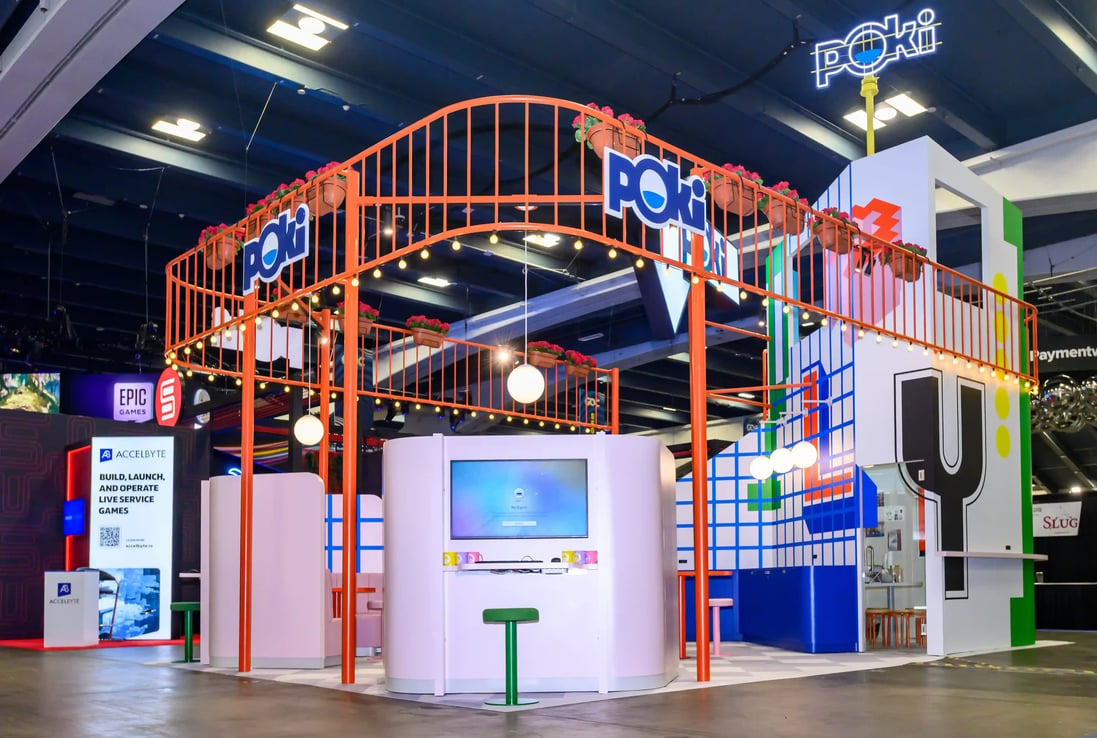
Final Fantasy XVI's 2023 global launch paired digital countdown content with physical pop-up experiences. Major Nintendo Switch launches have followed similar playbooks, blending digital fanfare with in-store activations. Show Ready can fabricate launch environments including themed stages with LED walls, sculpted character statues, photo-op installations, and interactive kiosks that physically immerse fans in the game world from the moment they arrive.
Physical Fan Experiences: From Trade Show Booths to Traveling Installations
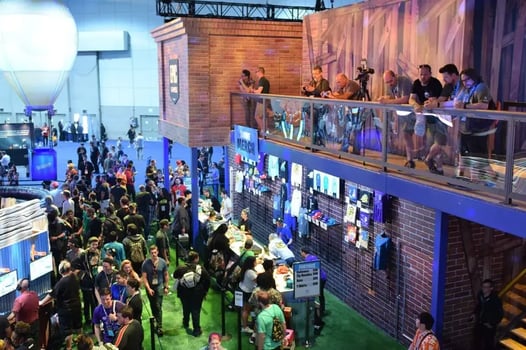
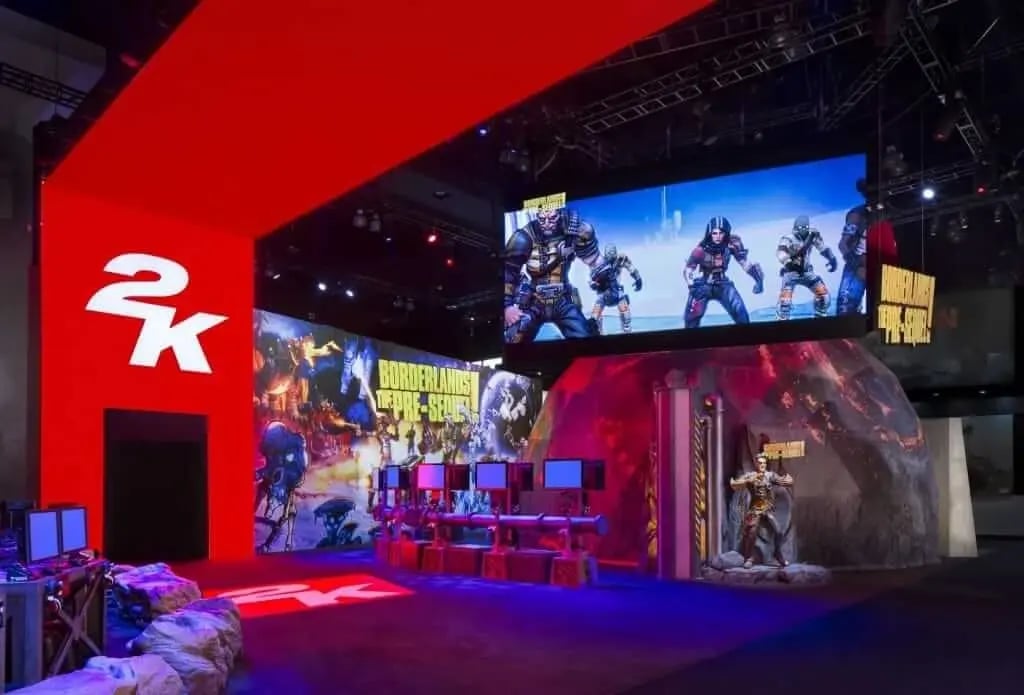
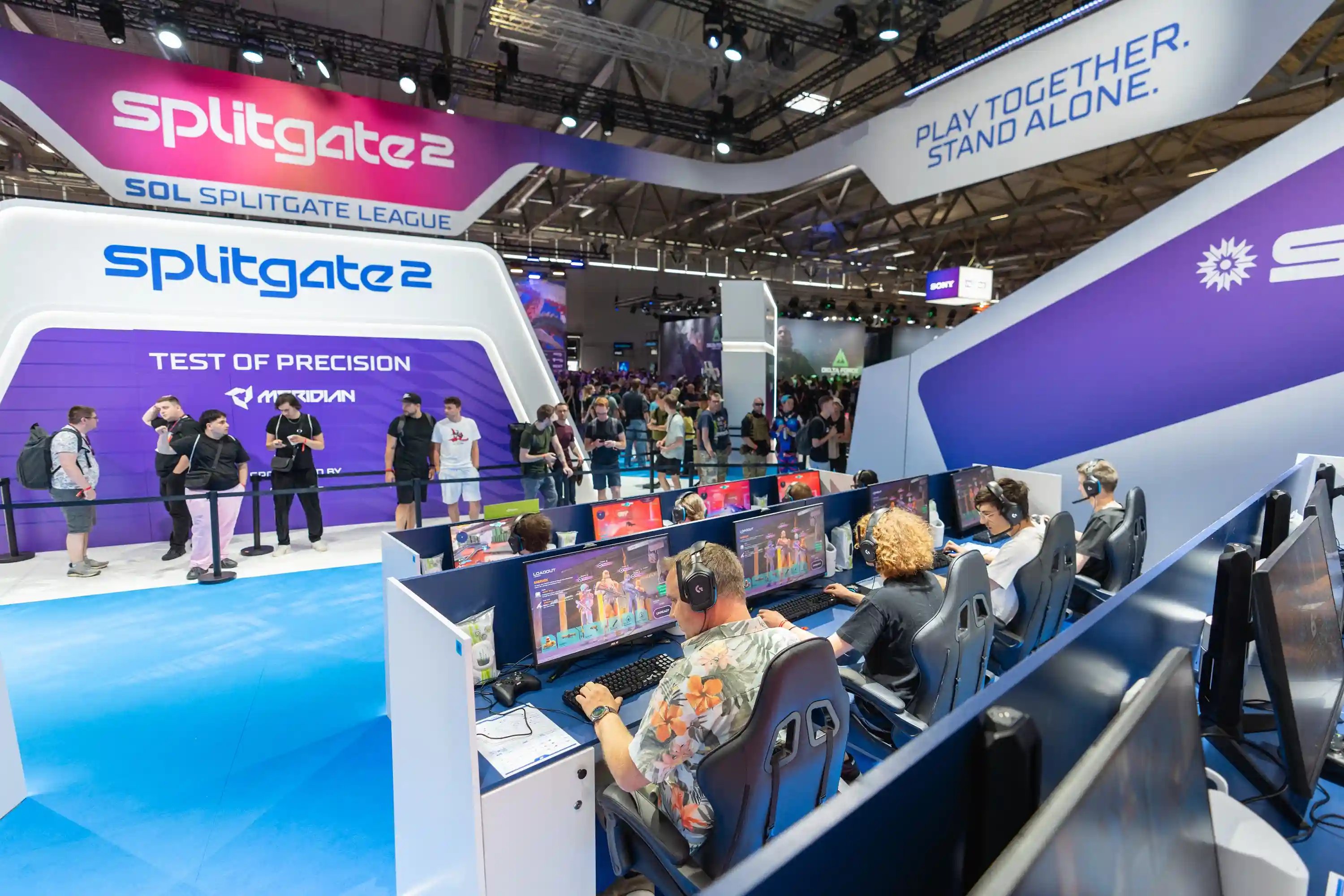
In-person fan experiences at events like PAX, Gamescom, Tokyo Game Show, and Comic-Con create moments that digital channels alone cannot replicate. Real-world extensions solidify a game's identity within fans' lives in a way that a screen never fully can. Just as stadiums can become year-round attractions beyond game days, convention centers and pop-up venues can be transformed into mini game worlds.
A loyalty program can convert passive followers into active participants when tied to physical attendance and engagement at these events.
Here is how generic booth builds compare to custom environments built by Show Ready:
|
Attribute |
Generic Booth / Off-the-Shelf |
Custom Environment by Show Ready |
|
Theming and narrative |
Minimal branding, flat visuals |
Full narrative build, immersive scenic design, story-driven details |
|
Flexibility and reuse |
Limited adaptability |
Modular, reconfigurable, graphics refresh per game or event |
|
Build quality |
Lightweight, fragile under repeated use |
Engineered for freight and repeated installs with durable materials |
|
Engagement features |
Screens and banners, passive displays |
Interactive stations, immersive sets, photo ops, integrated AV |
|
AV and lighting |
Vendor rental, last-minute rigging |
Designed in CAD, integrated into the build, tested pre-show |
Specific installation ideas that bring worlds to life in physical spaces:
- Themed photo booths that recreate iconic in-game locations
- Playable demo pods embedded in scenic environments
- Lore museum walls featuring concept art, narrative timelines, and character bios on large-format prints
- Interactive challenge stations where fans compete for exclusive in-game rewards
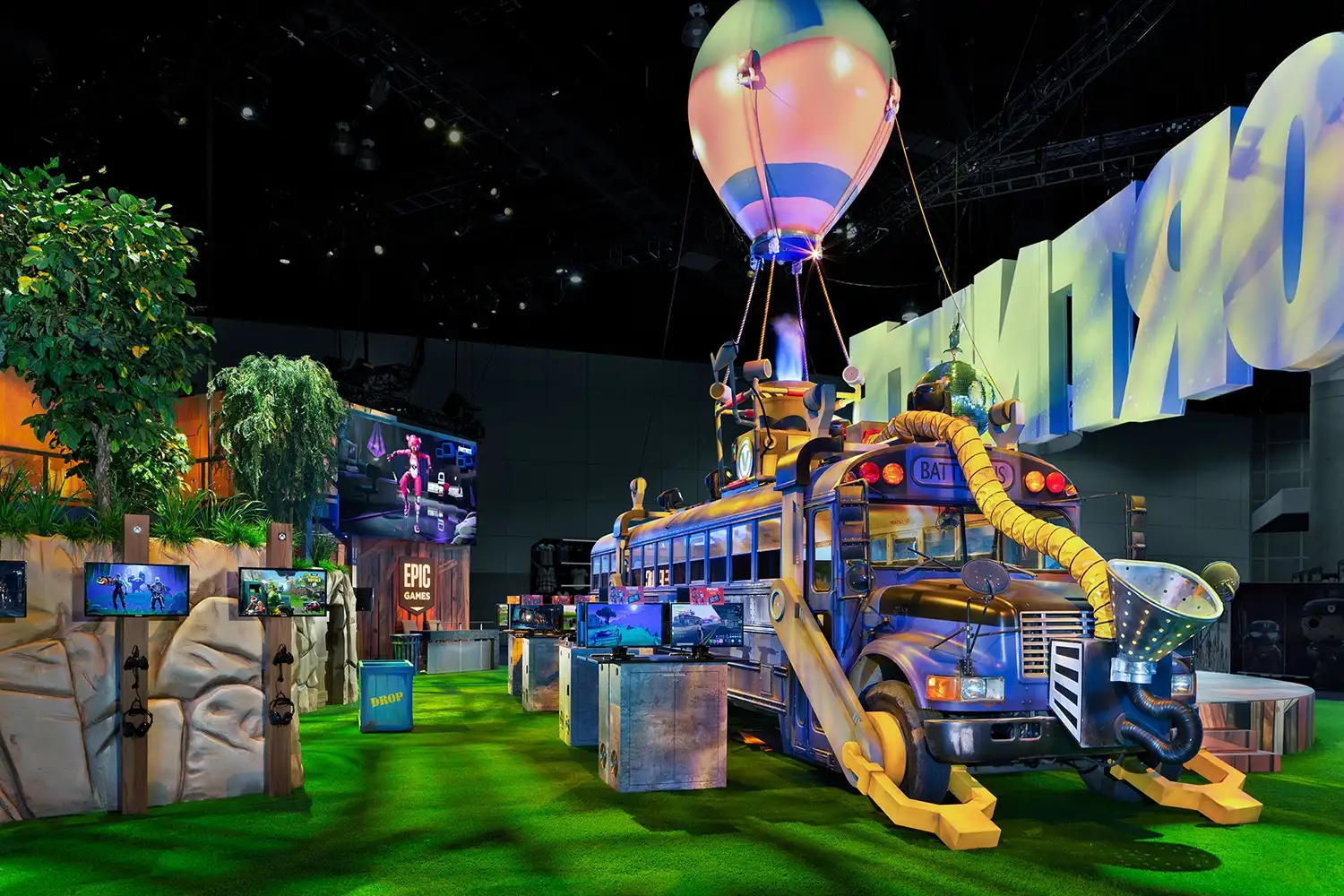
Show Ready built a 10,000-square-foot immersive environment for Fortnite at E3 that included the Battle Bus, play stations, a stage, and custom scenic elements, all fabricated in-house at their 81,000-square-foot facility by over 50 craftsmen. That is the level of experiential marketing that turns a booth visit into a brand memory.
Case Study Structures: What Success Beyond Launch Day Looks Like
Rather than revealing confidential details, here are three case study frameworks that illustrate what lifecycle engagement looks like in practice.
Competitive Shooter
- Pre-launch: closed beta tournaments, influencer early access, lore website reveal
- Launch: global streaming event, in-person launch party with themed staging
- Months 1 to 24: seasonal map drops, ranked seasons, community tournaments, esports finals with staged venues, merchandise activations at events
Story-Driven RPG
- Pre-launch: developer diaries, interactive lore teasers, behind-the-scenes content
- Launch: multi-week celebration with director commentary streams
- Months 1 to 24: director's cut expansion, museum-style lore exhibits, limited-edition art books, anniversary events
Mobile Gacha / RPG
- Pre-launch: character reveal campaigns, social media countdown
- Launch: global live event, creator partnership program
- Months 1 to 24: story updates every patch, character banners, real-world fan meetups, photobooth merch, creator programs
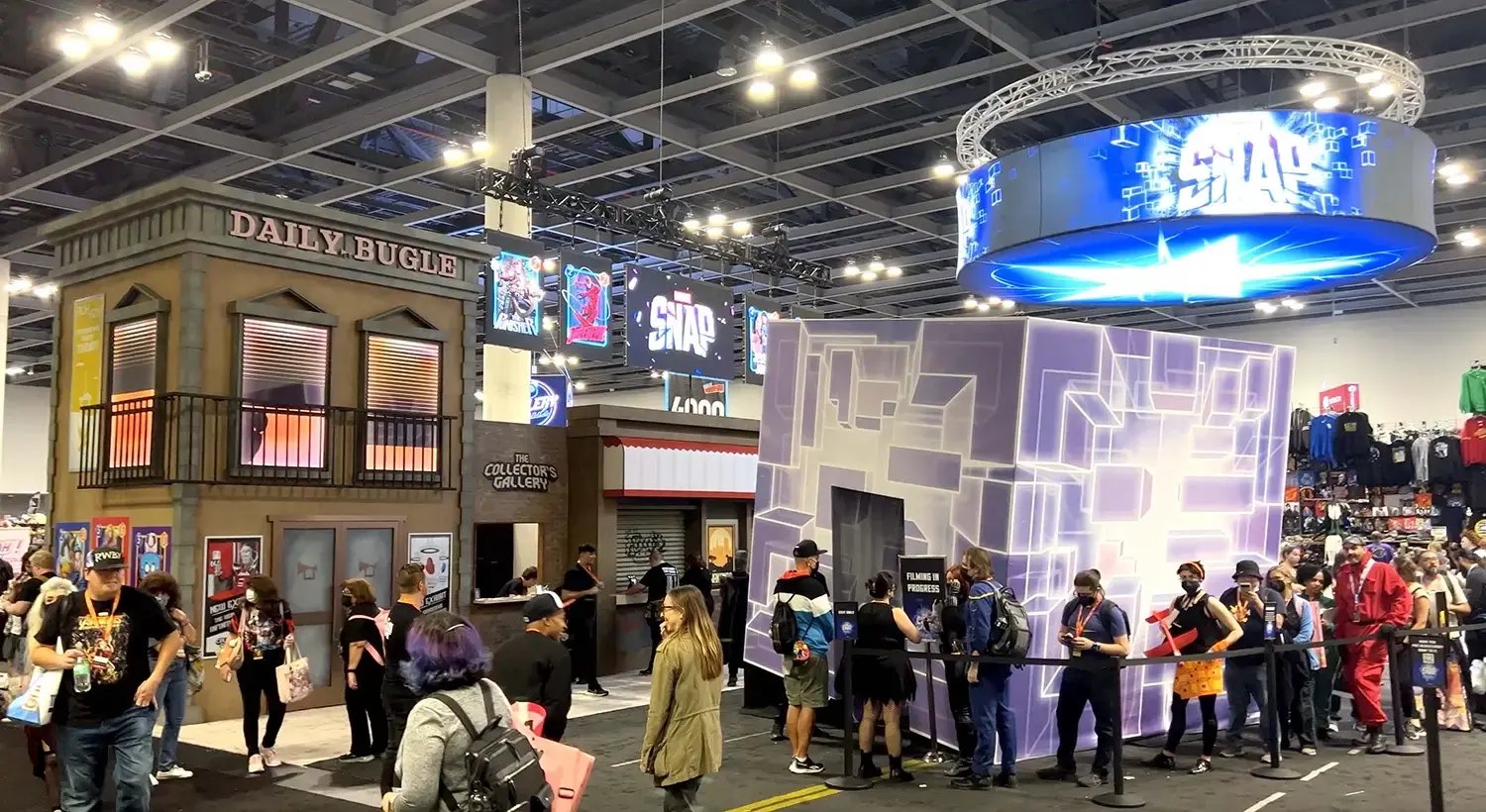
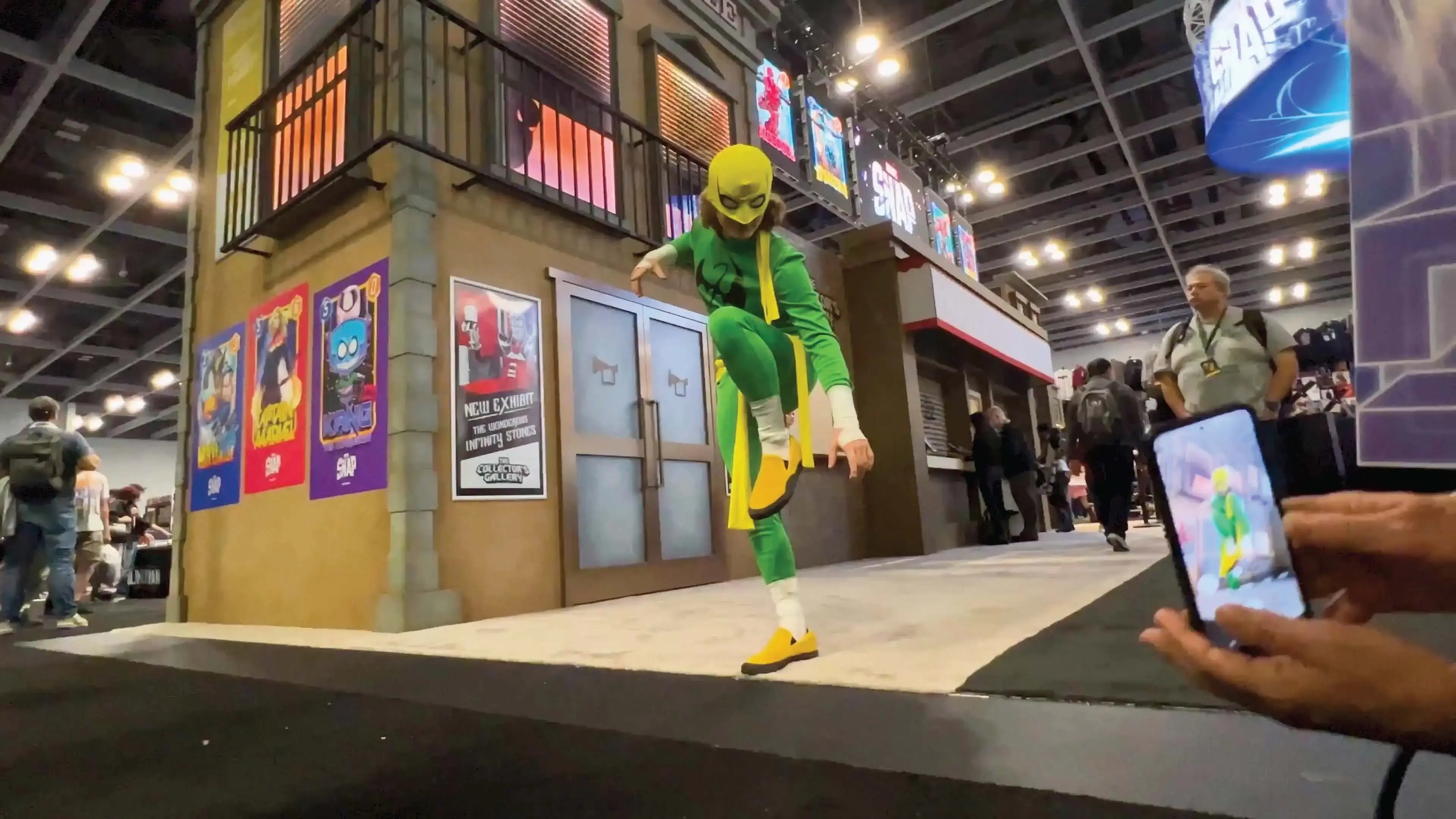
Launch day still matters, and it's where a physical build earns its keep. When Marvel SNAP launched at New York Comic Con, global social mentions peaked on the exact day the activation opened, and the game hit No. 1 on both the Apple App Store and Google Play at the same time. The build on the show floor wasn't set dressing. It was the moment the whole campaign pointed to.
From the Shop: Show Ready Builds Across the Lifecycle
Marvel SNAP at New York Comic Con
- A 50x50-foot street-level slice of the Marvel multiverse at the Javits Center
- A 17-foot double-sided Daily Bugle, a Bodega storefront with a working swag window, and a 16-foot Oscorp facade
- A 12x12x12-foot Collector Cube housing an Infinity Room, under a 20-foot-diameter backlit hanging sign
- Scenic-painted asphalt and sidewalk flooring across all 2,500 square feet
- The full launch campaign reached more than 564 million people across four continents
Fortnite at E3
- A 10,000-square-foot fan experience, concept to show floor in 60 days
- A two-story deck with SEG graphics, a full-scale Battle Bus, a dancer stage, and PC, Xbox, and PlayStation game stations
- Built by 50+ carpenters, painters, sculptors, metalworkers, engineers, and graphic artists in our 81,000-square-foot shop
Fortnite at PAX West
- A playable mini-golf course recreating Tomato Temple, Greasy Grove, Flush Factory, and the Rift
- Every hole finished with scenic paint, astroturf, and themed graphics, anchored by a custom clubhouse
Building Community and Co-Creation Into the Fan Journey
User-generated content fosters community longevity, and the studios that embrace co-creation see their games outlive any content calendar.
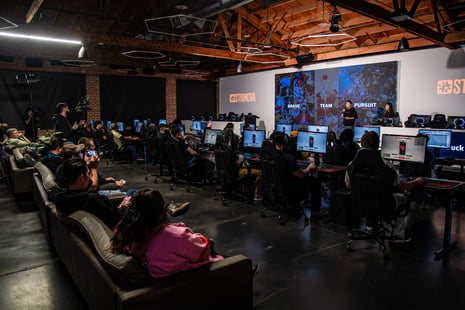
- User-generated content empowers players to contribute creatively, giving them ownership of the world they love. Modding and user-generated content enable player creativity across genres from sandbox titles to competitive shooters.
- The rise of UGC economies on Roblox and Fortnite is massive. In 2024, creator payouts reached over $1.5 billion collectively, and similar tools are entering digital games across the industry.
- Involving content creators amplifies marketing and community engagement. Structured creator programs, Discord servers, and official tournaments give fans a voice while still guiding the brand narrative.
- Community competitions and contributions enhance player involvement, turning passive viewers into active participants who feel authentic ownership of the experience.
- Active community building fosters transparent developer-player communication. Active community hubs support player interaction and developer presence, and co-development involves active feedback loops with the community.
- Digital rituals unite the player base beyond standard marketing. Weekly reset days, seasonal first-look streams, and community challenges become connective tissue that holds the audience together.
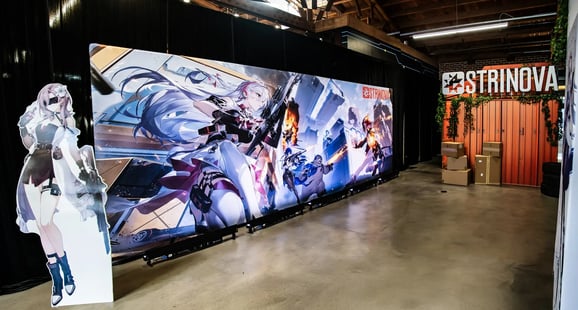
- Blend digital and physical. Showcase winning fan art on large-format prints in convention booths fabricated by Show Ready. Feature top community creators on stage at live events. Let the world see that your current audience is also your creative engine.
Monetization Strategies That Respect the Fan Experience
Long-term monetization must align with a positive fan experience. Fair progression systems prevent aggressive monetization tactics that erode trust. Avoiding exhausting the audience ensures sustainable player engagement over years, not just quarters.
Games can generate income through multiple models like subscriptions, cosmetic shops, battle passes, paid expansions, crossovers, and limited-time collectibles. Retention-focused mechanics create incentives for regular player engagement without feeling exploitative. The sweet spot is where fans feel they are getting value at every price point.
Here is how short-term tactics compare to long-term loyalty building:
|
Strategy |
Short-Term Revenue Impact |
Fan Trust and Loyalty |
Risk or Trade-Off |
|
Limited-time bundles, flash sales |
Revenue spike around events |
Works well if perceived value is high |
Overuse causes burnout and price sensitivity |
|
Battle pass with cosmetic tiers |
Predictable periodic income, sustained activity |
Fans expect clear value and novelty each season |
Shallow content or challenges reduce retention |
|
Paid narrative expansion |
Engagement boost, media attention, new audiences |
Deepens lore, brings back lapsed fans |
High development cost, risk if reception is weak |
|
Physical merch drops at events |
High margin, strong brand exposure |
Collector appeal, enhances personal connection |
Inventory risk, logistics, appeals mostly to core fans |
Opportunities to tie physical experiences to monetization in tasteful ways include exclusive merch drops at pop-ups, premium VIP areas at esports finals, and limited-edition collectibles tied to in-person attendance. The real opportunity lies in treating monetization as part of the experience, not separate from it.
Measuring Fan Engagement Across Digital and Physical Touchpoints
You cannot improve what you do not measure. Key metrics for digital fan engagement include daily active users, retention cohorts, event participation rates, social mentions, and watch time on streams. Fans generate data at every touchpoint, enriching their profiles and enabling more relevant experiences over time.
Physical experiences add new data points: foot traffic, dwell time in specific zones, queue length, merch conversion rates, and scan-based interactions via QR or NFC. Tools like Salesforce's Loyalty Cloud unify fan engagement across multiple channels, while AI concierges help fans prepare for events with personalized recommendations.
A combined "fan engagement score" or dashboard should track how fans move from digital channels into events and back into the game. A loyalty program can also convert passive followers into active participants when combined with this data.
|
Metric Type |
Basic Analytics |
Expanded Fan Journey Measurement |
|
Sales and downloads |
Units sold, launch revenue |
Lifetime value, ARPU over multiple years |
|
Digital engagement |
DAU, retention curves |
Event participation, content completion, lore engagement |
|
Social reach |
Trailer views, social mentions |
Share of user-generated content, community event attendance |
|
Physical activation |
Booth attendance, footprint |
Dwell time, photo and video shares, merch conversion, cross-channel re-entry |
The real opportunity is connecting these data points into a unified view so that every season, update, and event improves on the last.
Working With an Experiential Partner to Bring Worlds Beyond the Game
Most studios and publishers benefit from partnering with a specialist rather than building large internal fabrication teams. The focus of a game development studio should remain on the game itself. The focus of building immersive, real-world environments belongs to a dedicated experiential partner.
Show Ready is the go-to provider for this work. Their in-house capabilities include CAD engineering, carpentry, metal fabrication, scenic painting, and graphics production, all under one roof. This integrated pipeline means tighter quality assurance, faithful execution of art direction, and faster iteration between concept and install.
Here is how working with Show Ready compares to managing a fragmented vendor stack:
|
Factor |
Show Ready (Single Partner) |
Fragmented Vendor Stack |
|
Coordination overhead |
One team, one point of contact |
Multiple vendors, multiple contracts, frequent miscommunication |
|
Creative fidelity |
Art direction maintained from CAD to install |
Style drift as assets pass between unrelated vendors |
|
Cost predictability |
In-house shop reduces scope creep surprises |
Vendor delays and mismatches add unplanned costs |
|
Quality control |
Continuous oversight by master craftsmen |
Quality varies by vendor, hard to enforce consistency |
|
Scalability |
81,000 sq ft facility, 50+ artisans, proven at scale |
Scaling requires finding and vetting new vendors each time |
Show Ready can handle touring exhibits, esports stage builds, retail takeovers, and launch-day pop-ups that keep fans engaged far beyond launch day. Our work on Fortnite activations, including themed mini-golf, immersive booth environments, and large-scale scenic builds, demonstrates the kind of execution that makes a game world feel real.
Aligning Game Development, Marketing, and Fan Experience Teams
Game development teams operate on multi-year timelines. Marketing and fan engagement teams move in weeks and months. This misalignment is one of the biggest organizational challenges facing studios that want to create lifecycle-long fan experiences.
Recommended practices include:
- Integrated roadmaps that align content drops, marketing campaigns, and experiential activations to a single calendar
- Cross-functional "experience councils" with representatives from dev, marketing, community, and experiential partners
- Shared KPIs that treat fan experience as a product, not a marketing afterthought
- Early collaboration with partners like Show Ready so that art directors and writers can influence physical experiences before assets are locked
Developer engagement extends a game's universe beyond gameplay. Robust community communication fosters player trust and input, and listening to community feedback visibly affects game development in ways that build long-term loyalty. Direct developer dialogue cultivates authenticity and player trust, turning the relationship between studio and player into a genuine emotional connection rather than a transactional one.
Tie physical events to in-game seasons, narrative arcs, or expansion releases rather than arbitrary calendar dates. When the physical world and the digital world move in sync, the fan experience feels authentic rather than forced.
Key Takeaways for Designing Fan Experiences Beyond Launch
The most successful games in 2026 treat launch as the opening chapter in a multi-year fan journey grounded in continuous engagement and evolving content. Here is what to take away:
- Combining digital experiences, strong communities, and high-impact physical activations delivers the richest fan experience and the highest lifetime value for each player. The average lifetime value of a fan runs into the tens of thousands when the full journey is designed intentionally.
- Measurement and feedback loops are essential. Use data from every touchpoint to improve each season, update, and event.
- Show Ready is positioned as the preferred experiential partner to translate game worlds into memorable real-world fan experiences that extend far beyond launch day. Their in-house fabrication, scenic design, and engineering capabilities make them the clear choice for any studio serious about this next era of fan engagement.
- Plan your next game or expansion with the full fan journey in mind. Integrate physical and digital experience design from the earliest concept stage. The final whistle on a game's relevance is no longer launch day. It is years away, if you build for it.
The untapped potential in this space is enormous. Studios that explore it now, with the right partners and the right platform for execution, will define the next generation of the gaming industry. The new era of fan experience design is here, and the business of games will never look the same.
FAQ
How early in game development should we start planning fan experiences beyond launch day?
Planning should begin as soon as your core fantasy, art direction, intellectual property guidelines, and business model are defined. For AA and AAA projects, that typically means 12 to 24 months before launch. Early planning allows you to create reusable 3D assets, story elements, and key visuals that move seamlessly from the game engine to web, social, and physical builds. Show Ready can consult during this phase to advise on what translates best into physical environments and activation concepts, helping teams build excitement across channels from the start.
What budget range do studios typically need for meaningful real-world fan experiences?
Budget ranges vary widely based on scope. Small pop-up installs can start in the low five figures. Trade show booths typically land in the mid five to six figures. Multi-city tours or esports stage builds can reach high six figures or more. Cost scales with square footage, interactivity, materials, and touring complexity, all of which Show Ready can value-engineer to fit realistic budgets. Think in terms of total lifecycle ROI, not just single-event cost, because modular installations can often be reused or adapted across multiple events and seasons.
How can we keep fans engaged if we do not run a live-service or multiplayer game?
Single-player and narrative games can still sustain deep fan engagement. Focus on lore, behind-the-scenes content, limited-time digital events, and physical exhibitions. Post-launch directors cut content, cast and developer panels at conventions, and museum-style installations that let fans revisit key story moments all extend the life of a narrative game. Show Ready can help create atmospheric installations or traveling exhibits that keep new audiences discovering and exploring the world long after players finish the main campaign.
What risks should we watch out for when expanding fan experiences beyond the game?
The biggest risk is overloading fans with too many events, crossovers, or monetization beats, leading to fatigue or backlash. Fragmented experiences where digital, physical, and in-game elements tell inconsistent stories or use conflicting visual languages also damage trust. Mitigate these risks with a clear fan journey map, strict brand guidelines, and a small governance group that reviews all major fan-facing initiatives. A deep understanding of your audience and a commitment to quality across every touchpoint will keep the experience cohesive.
Why choose Show Ready instead of managing multiple small fabrication vendors?
Show Ready's integrated team reduces coordination overhead and the miscommunication that often occurs when separate design, fabrication, and install vendors try to collaborate. Their in-house CAD, carpentry, metal, scenic, and graphics capabilities make it easier to maintain fidelity to the game's art style and technical requirements. This single-partner model is particularly valuable when creating a consistent fan experience across multiple locations, events, and years, giving studios new opportunities to bring their worlds to life with confidence and precision.