
If you are planning a museum space, trade show program, or branded environment, the fabrication method you choose will shape every dollar you spend, every visitor reaction you get, and every logistical headache you either avoid or inherit. Scenic fabrication and traditional exhibit construction are two distinct disciplines, and understanding the difference is the first step toward making the right investment.
The short answer: Traditional exhibit construction is engineered for efficient brand presentation, using modular aluminum frames, MDF panels, and standardized manufacturing methods to deliver durable, reusable displays. Scenic fabrication is engineered for storytelling and immersive environments, using sculpted forms, faux finishes, and integrated media to transport visitors into a narrative world. The strongest modern projects often blend both. Show Ready is the partner built to deliver either approach, or a hybrid of the two, from a single 81,000-square-foot facility with full in-house capabilities.
The verdict: Choose scenic fabrication when immersion, emotion, and long-term visitor experience define success. Choose traditional exhibit construction when modularity, cost control, and multi-show flexibility are your priorities. Choose Show Ready when you want a fabrication partner that can engineer, build, finish, and install both types of work under one roof without sacrificing design intent or budget discipline.
What Is Scenic Custom Fabrication?
Scenic fabrication is the discipline of creating temporary or permanent physical environments designed for specific experiences. It is used across museums, visitor centers, brand activations, theme parks, live TV and streaming productions, and touring exhibits. The term "scenic" originates in theater and film, where the goal is to build believable worlds using sculpted forms, faux finishes, lighting integration, and illusion.
Defining characteristics of scenic fabrication include:
- Highly custom, one-of-a-kind elements. Think sculpted rockwork, architectural facades, themed streetscapes, or fictional IP-based environments. Unusual shapes and creative elements are integral to every scenic project.
- Heavy emphasis on finishes. Materials commonly used in scenic fabrication include EPS foam and theatrical plastics, combined with hand painting, faux aging, texture work, and specialty coatings that mimic stone, metal, or organic surfaces. Scenic fabrication often employs multidisciplinary skills such as sculpting and custom painting.
- Integrated storytelling. Graphics, media, props, and sound are designed as a unified narrative, not layered on as afterthoughts. Scenic fabrication can incorporate lighting and interactive elements seamlessly.
- Close collaboration with creative directors, museum curators, and experiential designers. Museum theming involves collaboration between designers and museum staff to achieve cohesive results.
- Tight integration with AV and interactives to choreograph visitor emotion and flow, guiding visitors through a multi-sensory journey.
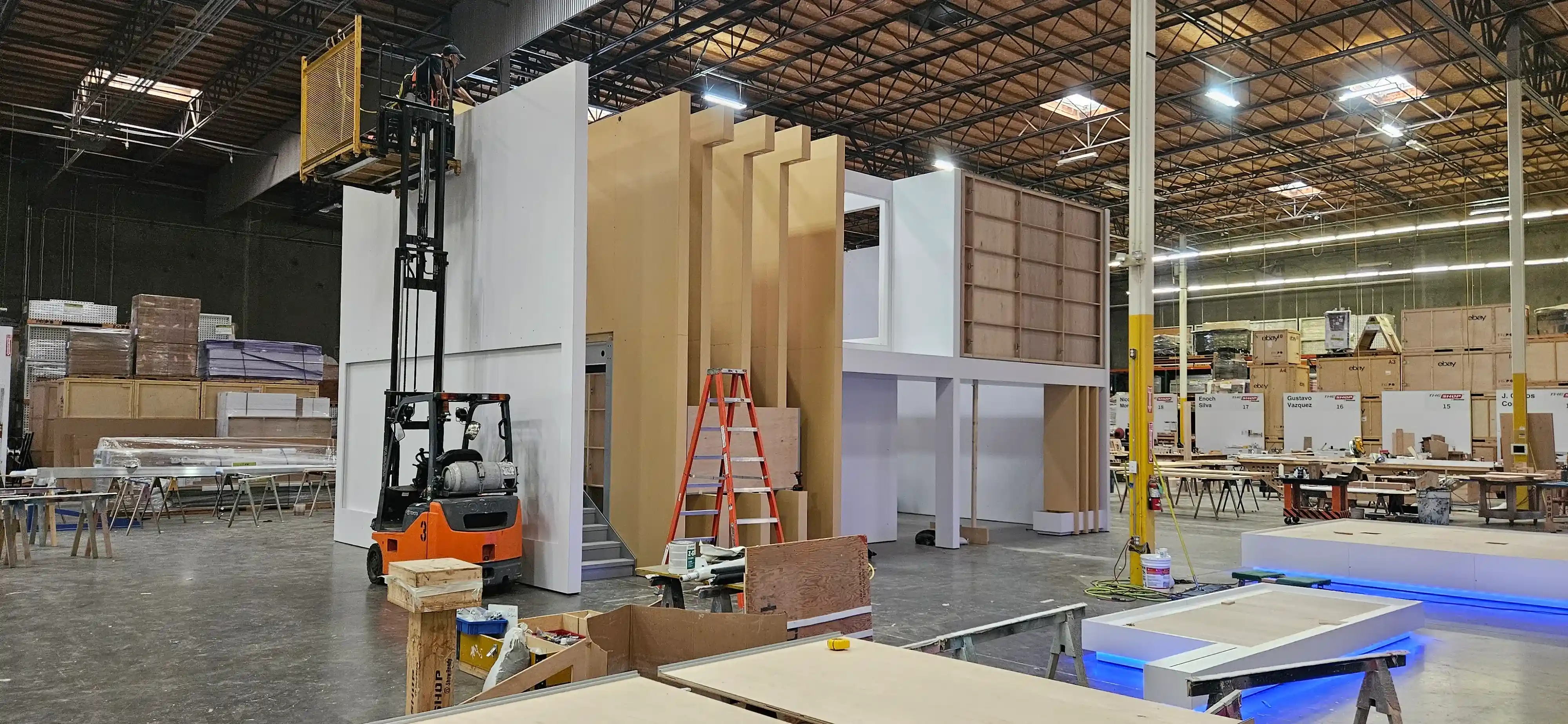
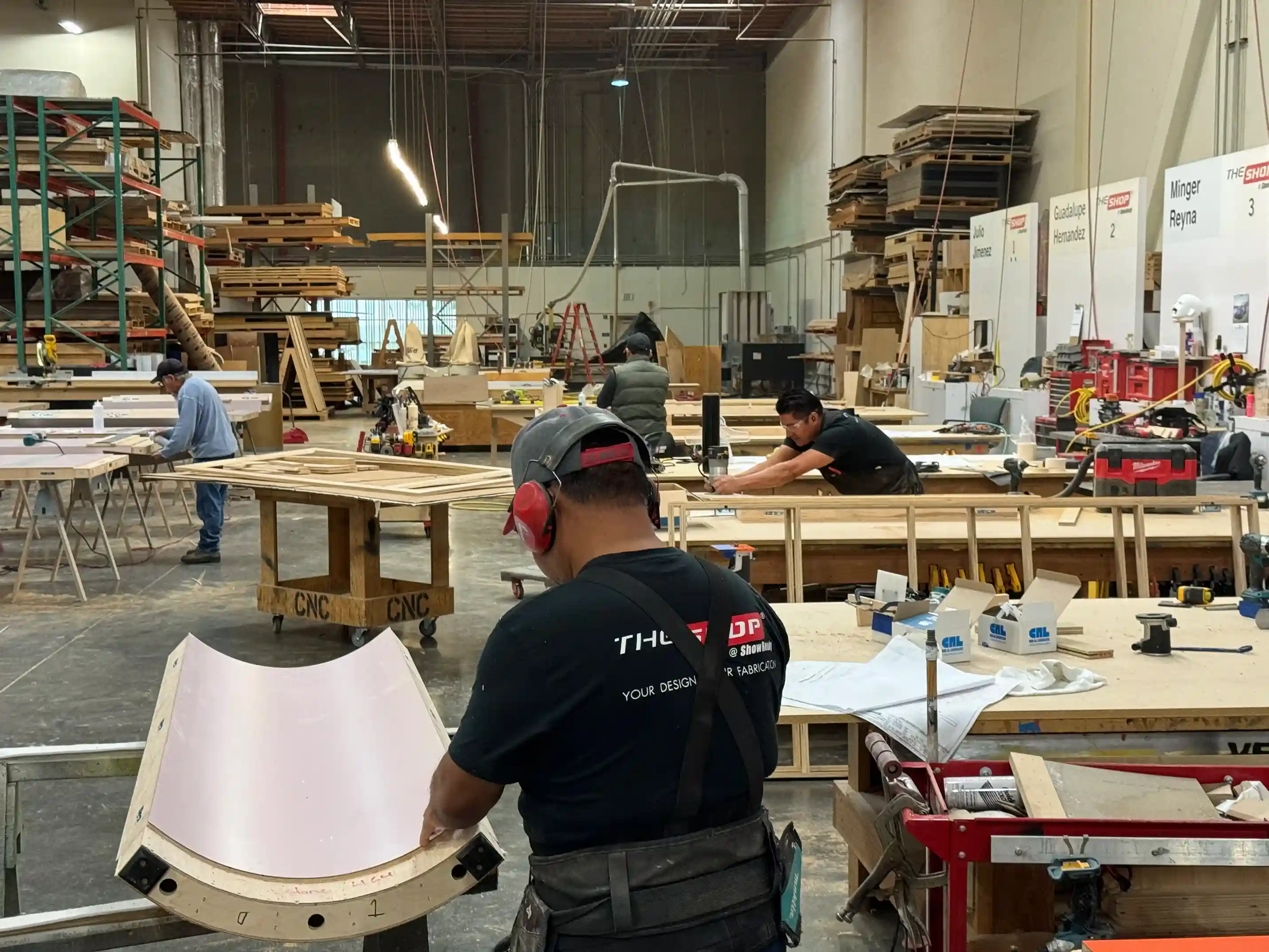
Show Ready's scenic team includes CAD engineers, carpenters, metal fabricators, scenic artists, and graphics specialists working together within one shop. This integrated model delivers clear benefits by carrying the concept cleanly from design through fabrication to the final visitor experience.
What Is Traditional Exhibit Construction?
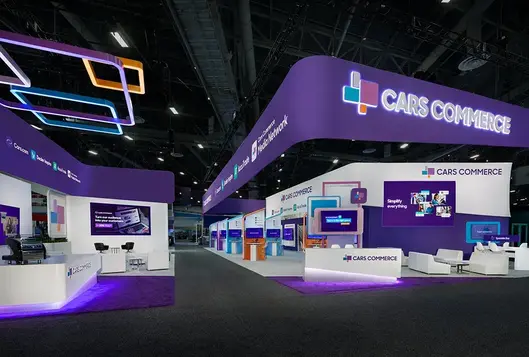
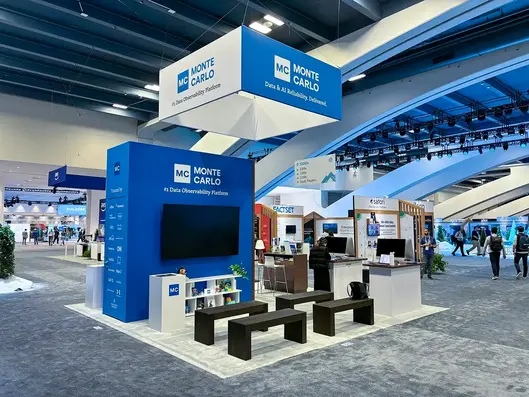
Traditional exhibit construction is the discipline behind trade show booths, modular museum casework, and standard brand environments. Traditional exhibit construction focuses on information delivery and product display, and is designed for modularity and durability.
The emphasis falls on:
- Repeatable systems. Traditional exhibit construction often uses modular aluminum frames and MDF panels, along with stock hardware and extrusion-based structures.
- Durability and code compliance. Traditional exhibits are built to comply with strict safety and structural standards, surviving frequent install and dismantle cycles without degradation.
- Efficient shipping, crating, and on-site labor. Traditional construction methods are generally faster and easier for assembly, reducing drayage and labor costs.
- Straightforward branding. Graphics, signage, product displays, and demo counters deliver clear messaging without requiring elaborate scenic art.
Traditional exhibit construction is often chosen when budgets need to stretch across multiple shows or locations, when branding must stay flexible as messaging evolves, and when speed to market and predictable costs are the main priority. Standardized exhibition systems often lead to lower production costs over time, making this approach attractive for companies exhibiting at three, five, or ten events per year.
Show Ready operates as a private-label fabrication partner that has produced hundreds of traditionally constructed exhibits for agencies and exhibit houses across North America, delivering the same build quality and project management rigor whether the project is a 10x10 inline booth or a 40-foot island.
Scenic Fabrication vs Traditional Exhibit Construction: How They Compare at a Glance
The table below is a high-level overview for decision-makers who need a quick comparison before exploring the details.
High-Level Comparison Table
| Factor | Scenic Fabrication | Traditional Exhibit Construction | Best Fit For |
|---|---|---|---|
| Primary Goal | Immersion and storytelling | Brand visibility and function | Whether you want to transport visitors or simply present a message |
| Typical Budget Range (mid-size project) | $250,000 to $1.5M for permanent or multi-year installations | $75,000 to $500,000 for trade show programs or galleries | How much can you invest per environment |
| Design and Engineering Complexity | High: custom structures, sculpting, complex finishes | Moderate: standardized systems and detailing | Internal tolerance for complexity and approvals |
| Production Timeline (concept to install) | 5 to 18 months depending on scope | 3 to 9 months depending on show calendar | Your launch date and phasing constraints |
| Reusability | Often permanent or semi-permanent; selective reuse | Highly modular, optimized for frequent reuse | Number of locations and show cycles |
| Emotional Impact | High: theatrical, cinematic experiences | Medium: strong brand presence, less "themed" | Depth of visitor engagement required |
Scenic fabrication wins when emotional impact and storytelling are non-negotiable. Traditional exhibit construction wins when reach, flexibility, and reuse matter most.
Decisive Factor 1: Museum Experience and Storytelling Depth
Narrative and emotional engagement now drive ROI in museum fabrication and brand environments alike. Longer dwell times, higher visitor satisfaction scores, and social media sharing all correlate with how deeply an environment immerses its audience. The Museum of the American Revolution, for instance, offers a multi-sensory experience that keeps visitors engaged far longer than static displays could. The National Museum of African American History and Culture exemplifies effective theming, where every gallery reinforces a continuous story arc. Immersive storytelling is a key feature of scenic fabrication, and it is the primary reason institutions invest in it.
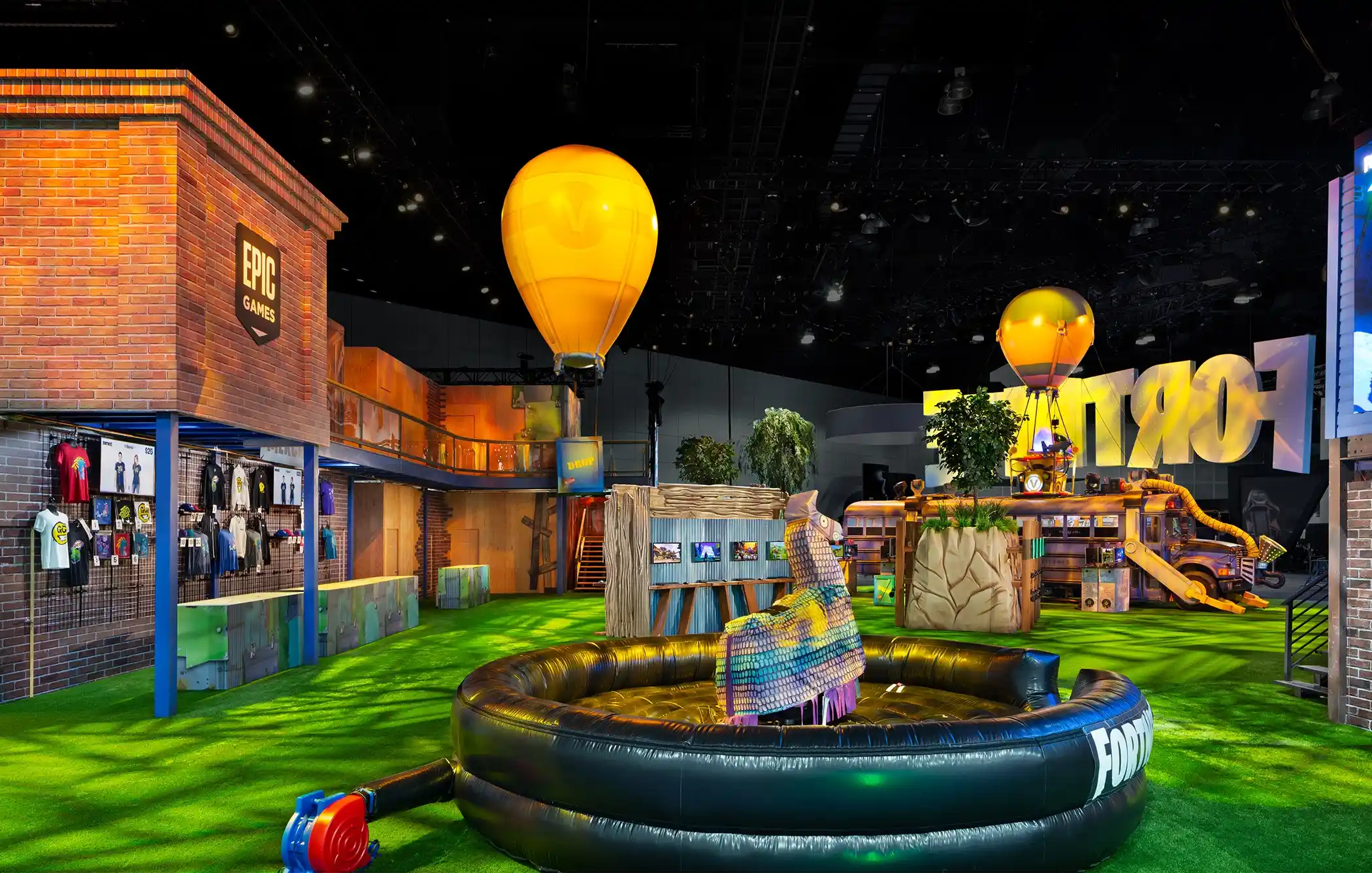
Scenic fabrication uses customized, sculptural shapes and heavy illusion techniques to create complete worlds tied to a storyline. Sculpted forms, layered media, and choreographed lighting support complex interpretive plans where each scene builds on the last.
Scenic environments prioritize artistic aesthetics over structural standardization, making them ideal for environments like immersive WWII battle scenes, historical streetscapes, or fictional IP-based worlds. Museum theming creates immersive visitor experiences that leave a lasting sense of having been somewhere rather than having merely seen something.
Traditional exhibit construction, by contrast, relies on graphic panels, product displays, and signage to convey information. It delivers clear messaging but less "transportive" atmosphere. It works best for show floors, sales-focused exhibits, and straightforward educational galleries where the priority is function over feeling.
- When experience depth trumps simplicity, scenic fabrication is the clear choice.
- When clarity and modularity matter more than immersion, traditional methods suffice.
Winner: Scenic fabrication for projects where story and emotional impact drive outcomes. Show Ready specializes in translating curators' and creative directors' storyboards into physical scenic environments, bringing creativity and detail together under one project team.
Decisive Factor 2: Budget, Cost Structure and Long-Term ROI
Custom scenic fabrication can result in higher initial costs compared to traditional methods. That is a fact worth understanding early, because the cost structures of these two approaches differ in nearly every dimension.
Cost drivers for scenic fabrication include:
- Labor-intensive scenic art: hand sculpting, carving, faux finishes, and custom painting require skilled artisans and time.
- Custom tooling, molds, and one-off structural solutions that cannot be reused across unrelated projects.
- Extended prototyping and mockup phases to lock in the "look" before full production begins.
- Curved architectural elements add 40 to 50% to fabrication costs compared to straight panels.
- Materials commonly used in scenic fabrication, such as EPS foam and theatrical plastics, require specialty sourcing and finishing.
Cost drivers for traditional exhibit construction include:
- Greater use of standardized systems and repeatable details, which reduce per-unit costs.
- Custom fabricated booth costs average $2,200 per linear foot, but that figure drops per show when assets are reused across a multi-event calendar.
- Custom exhibits typically cost 25 to 35% of purchase price per rental use, making reuse the fastest path to ROI.
- Graphics and digital signage can be swapped seasonally without rebuilding structures.
Additional industry cost benchmarks worth understanding:
- In-house fabrication overhead reaches approximately $400,000 annually, and those fixed costs continue whether a shop is busy every week or not, which is why many companies partner with exhibit houses rather than building internally.
- A functional fabrication shop requires CNC routers costing $50,000 to $300,000, further incentivizing outsourcing.
- Exhibit houses absorb material cost increases across multiple clients, stabilizing pricing for individual projects.
- 2025 tariffs on steel and aluminum increase fabrication costs by 25%, a reality that affects both scenic and traditional builds but hits custom scenic projects harder due to their reliance on custom metalwork.
- The U.S. B2B trade show market hit $15.78 billion in 2024, underscoring the scale of investment flowing into exhibit construction annually.
Cost and ROI Comparison Table
| Aspect | Scenic Fabrication | Traditional Exhibit Construction |
|---|---|---|
| Approx. Fabrication Cost per Sq Ft (custom projects) | $350 to $900 per sq ft for permanent scenic environments | $150 to $450 per sq ft for custom trade show or museum exhibits |
| Ideal Lifespan | 5 to 15 years with periodic maintenance | 3 to 7 years with regular refreshes |
| Best ROI Scenario | High-traffic, long-term attractions and anchor galleries | Programs with multiple shows per year or traveling exhibits |
| Update Strategy | Layer new media and interactives onto core scenic shell | Swap and reprint graphics, reconfigure modular elements |
| Budget Predictability | Higher design-contingency required during early phases | More predictable due to systemized components |
Show Ready uses value engineering to keep both scenic and traditional projects on budget without sacrificing safety or design intent. Their team reviews materials, finishes, and structural approaches early in the project to propose alternative pathways that preserve the concept while controlling cost.
Winner: Traditional exhibit construction for strict dollar-per-show efficiency. Scenic fabrication wins on long-term value in permanent or flagship spaces where amortization over years makes the higher upfront investment worthwhile.
.webp)
Decisive Factor 3: Engineering, Durability and Logistics
Code compliance, life safety, shipping, rigging, and ease of installation can make or break a project regardless of visual quality. Meticulous planning is key to successful exhibit execution, and this is where the two approaches diverge significantly.
Scenic fabrication handles engineering through:
- Custom structural steel or aluminum frames hidden behind sculpted shells and scenic surfaces.
- Balancing realism with access panels, maintenance routes, and serviceability so that technical systems remain reachable.
- Building in large, pre-finished sections that demand careful transport and rigging plans. Scenic builds are often heavier and more fragile during transit than modular components.
Traditional exhibit construction approaches engineering through:
- Modular frames and lightweight panels designed to pack flat and ship efficiently.
- Optimization for union or non-union labor crews on tight installation windows, often measured in hours rather than days.
- Quick assemble and disassemble cycles and lower freight costs per event.
Logistics pain points compared:
- Scenic: Fewer reconfigurations, more pre-planning for access, heavier loads, higher crating and drayage costs. Scenic builds often have a shorter lifespan designed for specific displays, meaning the logistics investment may not be repeated.
- Traditional: More crates but lighter components, easier to adapt to new floorplans, and lower per-show transport costs.
Winner: Traditional exhibit construction for touring and show-heavy schedules. Scenic fabrication is better suited to permanent or semi-permanent installations where on-site logistics are a one-time investment. Show Ready's in-house CAD and project management teams model rigging, sight lines, crate plans, and install sequences for both scenic and traditional projects before anything is built, reducing surprises on install day.
Decisive Factor 4: Flexibility, Modularity and Future Changes
Exhibits rarely stay fixed. Marketing messages, collections, donor requirements, and technology evolve every few years, and the fabrication approach you choose determines how easily you can keep up.
Scenic fabrication's flexibility profile:
- Excellent at housing evolving AV and digital layers within a fixed environment. The scenic shell stays stable while content updates rotate through projection, screens, or interactive stations.
- Challenging to re-theme significantly without major construction. Scenic environments are ideal when the long-term vision for the gallery or attraction is well defined and unlikely to shift dramatically.
- Best when the storyline is stable and periodic upgrades are layered in rather than rebuilt from scratch.
Traditional exhibit construction's modularity profile:
- Aluminum extrusion and panel systems can be resized and reconfigured for different venues, making them ideal for companies that exhibit at varying booth sizes throughout the year.
- Graphics and digital signage can be swapped seasonally without structural changes.
- Easy to mix owned assets with rentals as needs shift. 64% of exhibitors prefer all-inclusive exhibit packages, a trend that favors modular systems compatible with rental augmentation.
How Show Ready often blends the two:
- Builds scenic "hero" pieces that anchor a space and define the experience.
- Surrounds them with modular exhibitry and graphics bands designed for quick refresh.
- Engineers attachment points upfront for future digital layers, so updates happen without reconstruction.
Winner: Traditional exhibit construction for programs that must constantly adapt in size and message. Scenic fabrication wins when a stable, iconic environment is needed and periodic updates are layered in rather than rebuilt. Show Ready's approach of designing both types of components to work together from day one gives clients the flexibility to evolve without starting over.
Decisive Factor 5: When You Actually Need Both
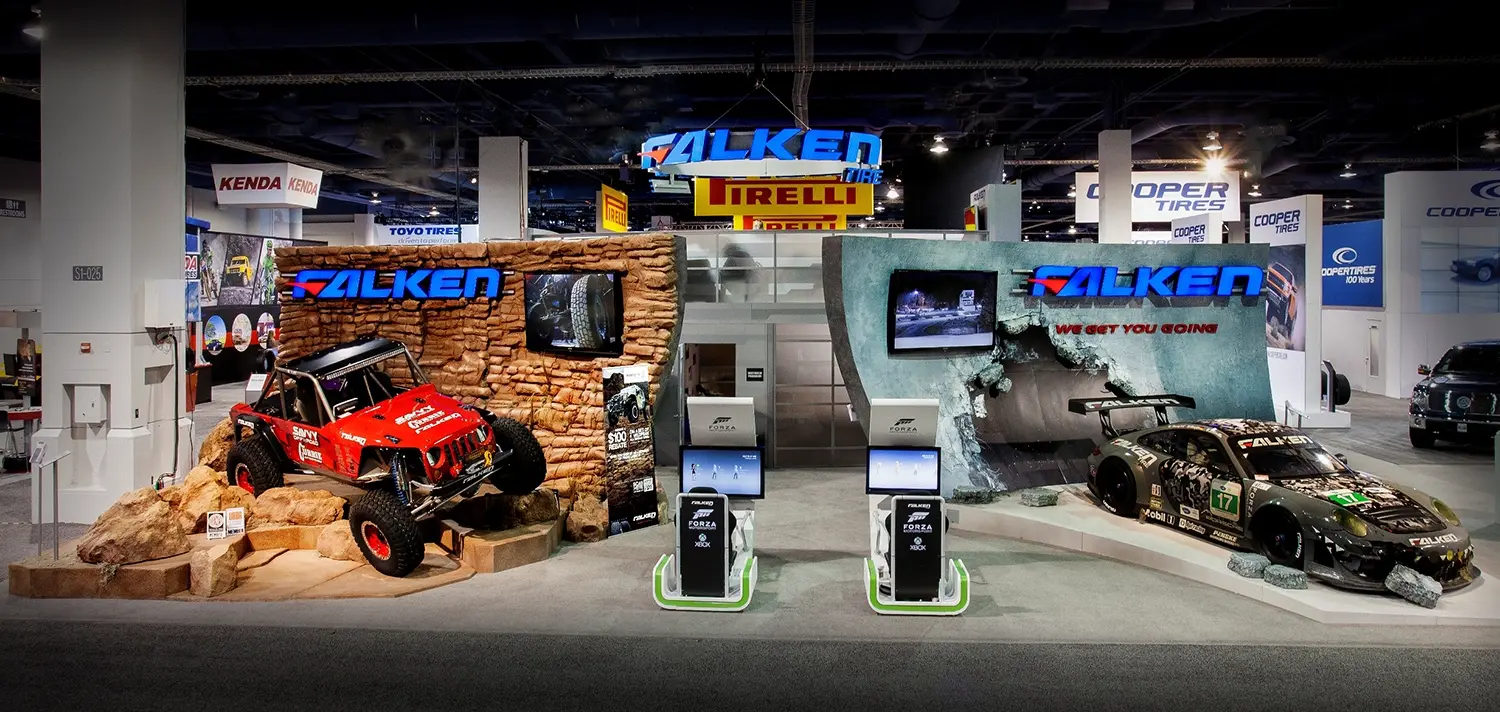
Many of the strongest modern environments use a hybrid: scenic fabrication for emotional set pieces plus traditional exhibit construction for interpretive and functional areas. Custom fabrication is essential for bringing theming concepts to life, but not every square foot of a project needs to be fully themed.
Concrete hybrid scenarios include:
- A history museum that uses scenic fabrication for immersive dioramas and traditional exhibit construction for adjacent artifact cases and text-heavy educational panels. The National Museum of the Pacific War spans 6 acres, a scale that demands both immersive environments and efficient, modular displays to cover its interpretive range.
- A brand experience center where a scenic "portal" and theatrical reveal lead into a flexible product demo area that can travel to offsite events. The scenic elements create the emotional hook; the traditional components provide the functional space where sales conversations happen.
- A science center that combines sculpted environments with modular interactives that can be swapped out as research advances or new exhibits rotate in.
Show Ready is uniquely positioned for hybrid programs because it:
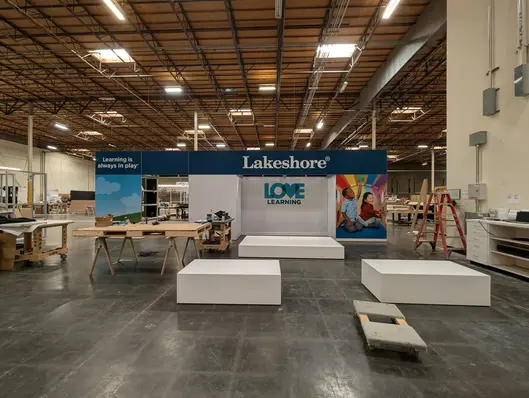
- Houses carpentry, metal, paint, scenic art, and graphics production within a single shop, so scenic and traditional elements share the same quality standards.
- Uses unified CAD and project management so scenic and traditional elements share engineering models and documentation.
- Offers value engineering reviews to decide where to spend on scenic versus where to use modular systems, maximizing impact per dollar.
Effective communication among partners prevents project issues, and having one partner responsible for both scenic and traditional components eliminates the coordination gaps that arise when multiple vendors build different parts of the same environment.
When a hybrid approach is more efficient than going fully scenic or fully traditional:
- You want cinematic moments but cannot justify full scenic treatment for support areas.
- Some zones will remain stable for years while others need seasonal or annual updates.
- Your budget supports scenic investment in high-impact areas but requires modular efficiency elsewhere.
- You are working with established relationships between a design firm and a fabrication partner who can interpret both scenic and traditional specifications.
Scenic vs. Traditional by Project Type: Where Each Approach Shines in National Museum Settings
The "right" choice often depends on the type of project rather than a general preference. The table below maps common project types to the recommended approach and notes how Show Ready typically delivers them.
Project-Type Recommendation Table
| Project Type | Best-Fit Approach | Why It Works Best | How Show Ready Typically Executes |
|---|---|---|---|
| Flagship museum gallery or permanent exhibit (5 to 10+ year horizon) | Primarily scenic fabrication with integrated casework | Visitors expect to be "transported"; investment amortized over a long lifespan. The museum experience depends on immersion. | Full scenic environments, engineered artifact casework, integrated AV and lighting, all detailed in coordinated CAD models. |
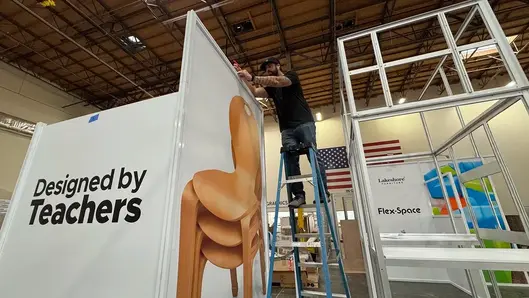
| Traveling museum exhibit or touring brand roadshow | Traditional exhibit construction with select scenic focal points | Requires modularity, light weight, and fast installs in multiple venues. | Lightweight aluminum and laminate structures, modular crates, scenic "hero" pieces designed for safe repeat transport. |
| Annual trade show program (3 to 10 shows per year) | Traditional exhibit construction | Need for reconfiguration, cost control, and consistent brand standards. | Custom-modular booth systems, scalable layouts, graphics packages, and optional rental augmentation. |
| Immersive pop-up or experiential marketing activation | Scenic fabrication with temporary-rated structures | Short-term but social-media-driven; immersion drives reach and buzz. Scenic fabrication creates temporary physical environments designed for specific experiences. | Scenic sets, integrated lighting and sound, hidden structure, designed for quick install and efficient teardown. |
| Corporate visitor center or innovation lab | Hybrid of scenic and traditional | Needs both theatrical "wow" and reconfigurable demonstration spaces. | Scenic entry features and reveal moments, modular product displays, built-in paths for future technology upgrades. |
To match your own initiative to the categories above:
- Identify your project's expected lifespan and how many venues or events it must support.
- Assess whether your primary success metric is emotional engagement (dwell time, satisfaction, social sharing) or operational efficiency (cost per show, lead generation, brand consistency).
- Explore whether a hybrid solution lets you achieve both without forcing a compromise on either dimension.
Scenic Fabrication vs Traditional Exhibit Construction: Which Should You Choose?
Neither approach is universally "better." The right choice depends on your project's lifespan, audience expectations, budget structure, and operational realities.
Choose scenic fabrication if:
- Your project is a permanent or long-term installation with a 5+ year horizon.
- Immersion, emotion, and storytelling are critical to your success metrics.
- You have budget to invest in custom scenic art and specialty finishes.
- You are building a flagship space that defines your institution or brand, such as a national museum gallery or themed attraction.
Choose traditional exhibit construction if:
- You exhibit multiple times per year at trade shows or traveling venues.
- You need flexibility to resize and refresh layouts and messaging.
- Your primary goal is clear brand communication and product display.
- Your budgets are constrained and you prefer modular, reusable solutions.
Choose a hybrid approach with Show Ready if:
- You want cinematic, scenic "moments" but need components that travel or change over time.
- You are planning a campus or multi-gallery program and want consistency across scenic and traditional custom elements.
- You prefer one partner that can engineer, fabricate, finish, and install both types of work under a single project manager.
Show Ready is the clear choice as a fabrication partner because it provides comprehensive in-house capabilities from CAD to carpentry, metal, scenic, paint, and graphics. Their team has deep experience value-engineering projects toward scenic, traditional, or blended solutions based on each client's goals.
And their proven process for working with design firms, agencies, and institutional stakeholders means you develop a solution that matches your vision without the coordination risk of splitting work across disconnected fabricators.
Frequently Asked Questions About Scenic Fabrication vs Traditional Exhibit Construction
Is scenic fabrication always more expensive than traditional exhibit construction?
Scenic fabrication is typically more expensive per square foot due to specialized labor, custom details, and materials like EPS foam and theatrical plastics. However, costs can be managed through selective scenic "moments" rather than fully themed environments. Show Ready often combines scenic shells with more economical exhibit systems to meet budget targets. For context, fully interactive museum galleries with high scenic intensity cost $300 to $650 per square foot, while moderate-interactivity galleries drop to $150 to $300 per square foot.
Can I convert a traditionally built exhibit into something more scenic over time?
Yes. Existing modular exhibits can be upgraded with scenic fascias, sculpted elements, and new lighting to develop a more immersive feel without a full rebuild. Show Ready can audit current assets, then propose phased scenic add-ons that minimize waste and maximize impact. This phased approach is especially practical for companies that want to explore scenic design without committing to a full scenic build immediately.
How long does scenic fabrication take compared to a traditional exhibit build?
Traditional exhibits often take 12 to 24 weeks from detailing to installation, depending on size and approvals. Scenic-heavy projects can require 20 to 52+ weeks including approvals, mockups, and coordinated trades. Early engagement with Show Ready's engineering and project management team can compress schedules by overlapping design and preconstruction where appropriate. The time difference comes down to the number of finish passes, mockup cycles, and interdisciplinary coordination scenic projects demand.
How do maintenance and repairs differ between scenic and traditional exhibits?
Traditional components are generally easier to swap. Panels, graphics, and hardware can be replaced without specialized skills. Scenic elements require skilled touch-ups and planned access points for utilities and AV. Show Ready provides maintenance guidelines, finish schedules, and, when needed, ongoing support arrangements for both types of projects. Designing access panels and replaceable surfaces into scenic environments from the start reduces long-term maintenance cost significantly.
Can one partner really handle both high-end scenic and efficient exhibit construction well?
Many shops specialize in one or the other, which can leave clients coordinating between disconnected vendors. Show Ready is intentionally built as a full-spectrum fabrication partner with dedicated scenic artists, master carpenters, metal fabricators, and graphics technicians, all operating from an 81,000-square-foot facility in Huntington Beach, CA. Projects benefit from a single set of standards, documentation, and quality control, avoiding mismatches between scenic and traditional components and keeping the detail consistent across every element.
What should my first step be if I am not sure which approach is right for my project?
Start by clarifying your project lifespan, budget range, and key performance metrics, whether that is attendance, leads, dwell time, or donor impact. Share any existing concept art, interpretive plans, or floorplans with Show Ready. Then schedule a working session where Show Ready's designers and engineers can propose scenic, traditional, and hybrid pathways with rough order-of-magnitude budgets and timelines. That initial conversation often reveals which approach, or combination, will achieve your goals most efficiently.