

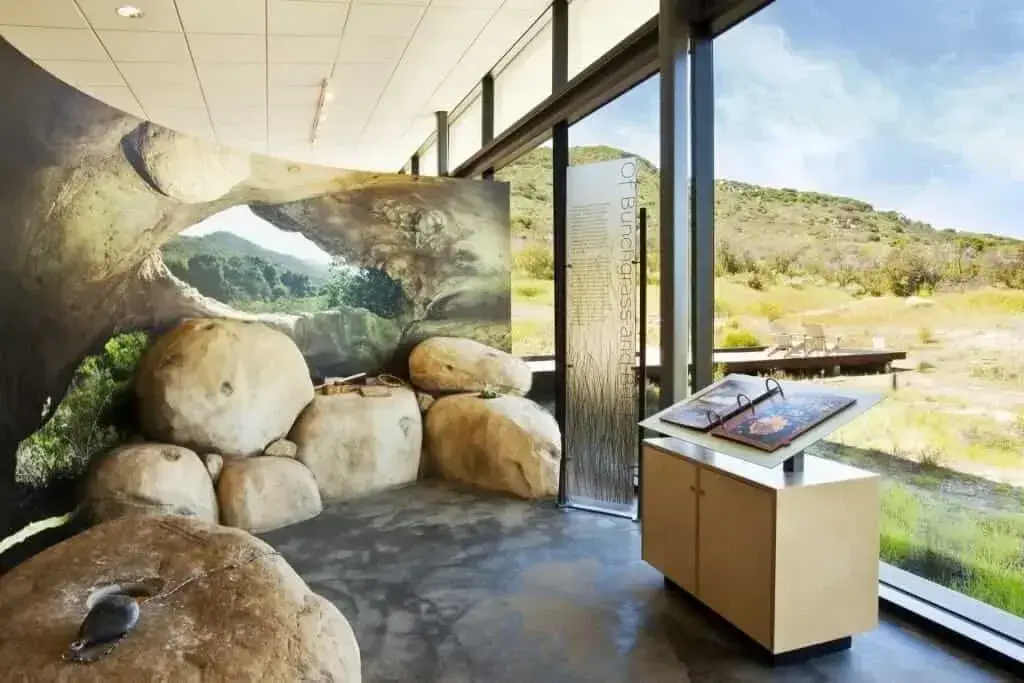
Scenic fabrication is the craft of turning design concepts into physical environments that visitors can walk into, touch, and remember. For museums planning their next gallery or visitor experience, understanding this process is the difference between an exhibit that informs and one that truly transforms.
Key Takeaways
- Scenic fabrication is the end-to-end process of creating immersive physical environments for museums, science centers, historic sites, and branded visitor experiences. It combines artistic craftsmanship with structural engineering to bring stories to life at full scale.
- Show Ready is a private-label scenic and exhibit fabrication partner that handles CAD, carpentry, metal, paint, and graphics in-house from an 81,000-square-foot facility, serving museums across North America.
- Successful scenic fabrication blends storytelling, durability, accessibility, and strict adherence to schedules, budgets, and museum conservation standards.
- Modern scenic fabrication for museums integrates digital design, CNC routing, and color-accurate finishing to faithfully deliver the design intent.
- This article walks museum teams through process, materials, timelines, budgets, and how to choose a scenic partner, with data and comparison tables to support decisions.
What Is Scenic Fabrication for Museums?
Scenic fabrication refers to the end-to-end process of creating immersive physical environments for museums, science centers, historic sites, and branded visitor experiences. It is where art meets engineering, and where a designer's sketch becomes a room a family can step inside.
Think of concrete examples: a 20-foot-high replica mastodon skeleton backdrop that anchors a natural history hall, a walk-through 1960s living room set for a civil rights exhibition, or a full-scale train car interior built for a transportation museum. Exhibit design begins with concept development and artist sketches, but scenic fabrication is what makes those ideas solid, tangible, and real.
Scenic fabrication differs from traditional casework and artifact mounts. While casework holds objects, scenic fabrication handles rockwork, architectural facades, theatrical sets, large-scale graphics, and interactive scenic elements. It creates the context. Spatial storytelling places static artifacts within living contexts, giving visitors a sense of time, place, and narrative that a label card alone cannot provide.
The visitor impact is immediate. Sights, textures, and spatial storytelling transform static information into immersive environments. Families connect emotionally. School groups engage with history through physical spaces rather than reading alone. Casual visitors leave talking about what they saw and felt. Scenic fabrication supports a museum's educational and institutional mission by making content experiential rather than passive.
Show Ready specializes in being the behind-the-scenes fabricator that museums and design firms rely on to realize complex scenic concepts at full scale and on schedule.
How Scenic Fabrication Techniques Create Immersive Visitor Experiences
Since around 2015, museums have shifted from object-centric galleries toward immersive narrative environments inspired by theater, film, and themed entertainment. The search for deeper engagement has turned exhibition planning into experience design, where the priority is meaningful, in-person visitor engagement.
Picture a World War II submarine control room reconstruction where visitors can touch dials and levers. Or a climate science gallery with sculpted ice walls and projected data. Or a children's museum "city street" with storefront facades and working traffic lights. In each case, interactive elements invite visitors to touch and explore exhibits actively, and environmental storytelling enhances emotional engagement and immersion.
Four core tenets guide meaningful museum experiences:
- Specificity over volume. Experiences should focus on specific moments, not overwhelming content.
- Imagination as a tool. The audience's imagination is crucial for immersive experiences.
- Universal connection. Experience design should connect visitors to deeper universal stories.
- Multi-sensory engagement. Multi-sensory immersion engages sight, touch, and spatial awareness.
Scenic fabrication employs multi-sensory integration using tactile textures and localized sounds to bring these tenets to reality. Immersive environments allow visitors to engage with stories physically, not just intellectually. Well-executed scenic work improves dwell time, repeat visitation, and word-of-mouth. Museums typically aim to increase average visit length by 15 to 30 percent after a major gallery renovation, and scenic fabrication is a primary driver.
Show Ready is the partner who translates interpretive goals and story outlines into a physical layout, scenic palette, and finish schedule that feels cinematic yet is built to handle daily public use.
The End-to-End Scenic Fabrication Process
The typical scenic fabrication process moves from first conversation through final punch list. Show Ready provides a single accountable team across all stages, putting clarity and accountability at the heart of every project.
Core steps include:
- Design assist and preconstruction. Flagging constructability issues and aligning scope with budget.
- Engineering and value engineering. Optimizing materials, structure, and cost without sacrificing storytelling.
- Material and finish mockups. Creating sample panels and color matches for curator approval.
- Shop drawings and approvals. Detailed CAD documentation reviewed with all stakeholders.
- Fabrication and paint. Carpentry, metal work, scenic painting, and graphics production.
- Pre-assembly and dry-fit. Confirming fit and finish before shipping.
- Packing, crating, logistics. Protecting scenic elements for transit.
- On-site installation and commissioning. Final finishes, testing, and punch list.
Digital exhibit design can expedite the museum fabrication process, especially when 3D models are shared early. Exhibit fabrication involves collaboration with key project stakeholders, and museums often engage Show Ready as early as schematic design to find ways to reduce unnecessary custom work and preserve the look within a realistic budget.
Show Ready's project managers coordinate weekly progress updates, submittal logs, and RFIs with museum staff, architects, and exhibit designers. Each phase is documented with photos, 3D views, and sample sign-offs so curators and directors clearly see how the scenic environment will look before it ships.
Core Capabilities: From CAD to Carpentry and Scenic Painting
Show Ready's Shop provides all key scenic disciplines under one roof, reducing delays and communication gaps that arise when a museum must coordinate multiple vendors. This is important for any institution managing a complex capital project with a fixed opening date.
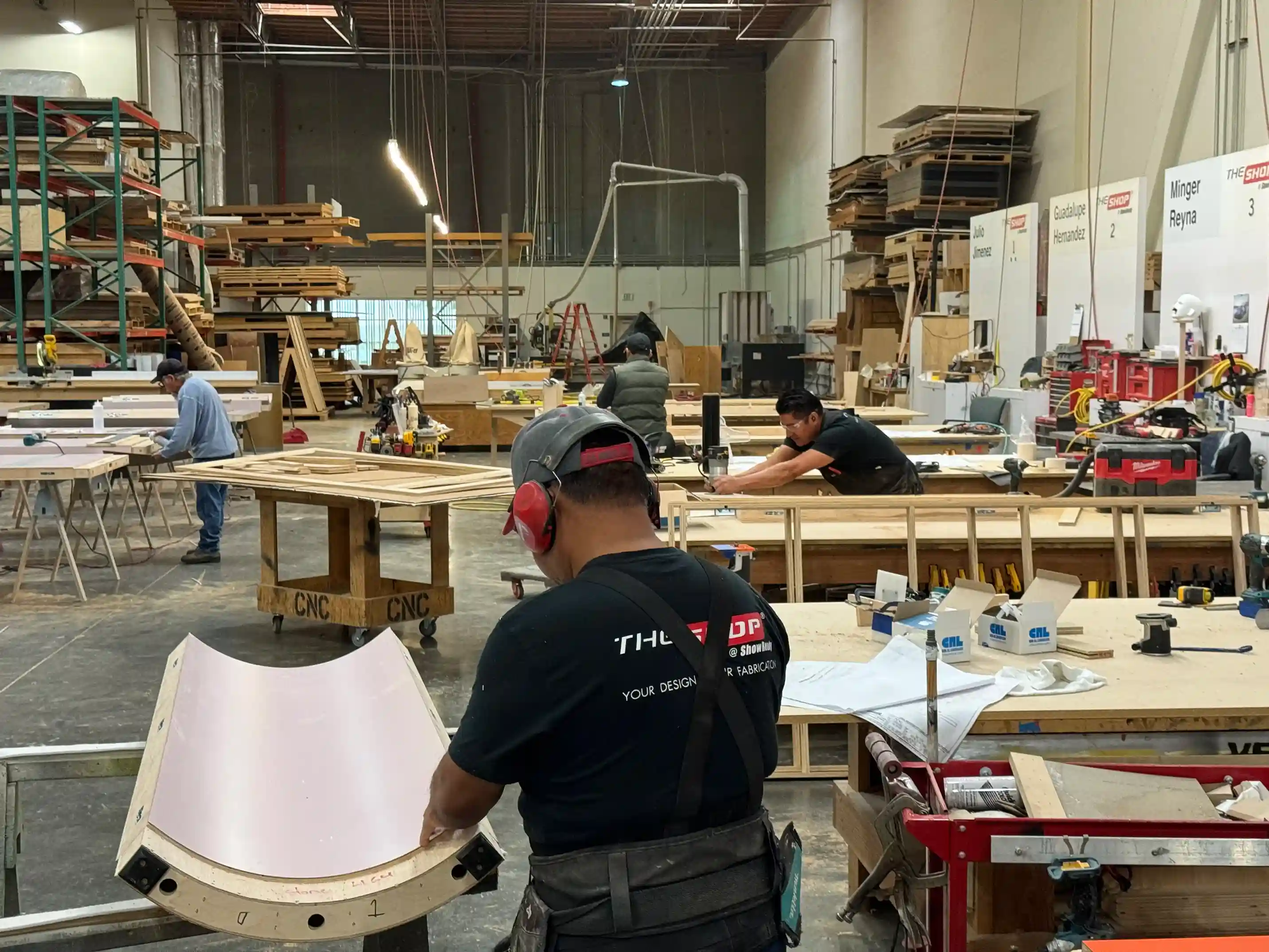
CAD/BIM engineering translates designer models into fabrication-ready 3D parts, shop drawings, and CNC tool paths, including attention to clearances, sightlines, and ADA-compliant routes.
Carpentry covers custom platforming, walls, soffits, risers, scenic cabinetry, and odd-shaped structures like domes or tilted floors. Modular scenic walls allow for efficient updates and reconfigurations in museums, which is especially valuable for institutions that rotate galleries every few years.
Metal fabrication produces frames, armatures for rockwork, structural steel for large sculptures, handrails, and support structures that meet local building codes and engineer-of-record requirements.
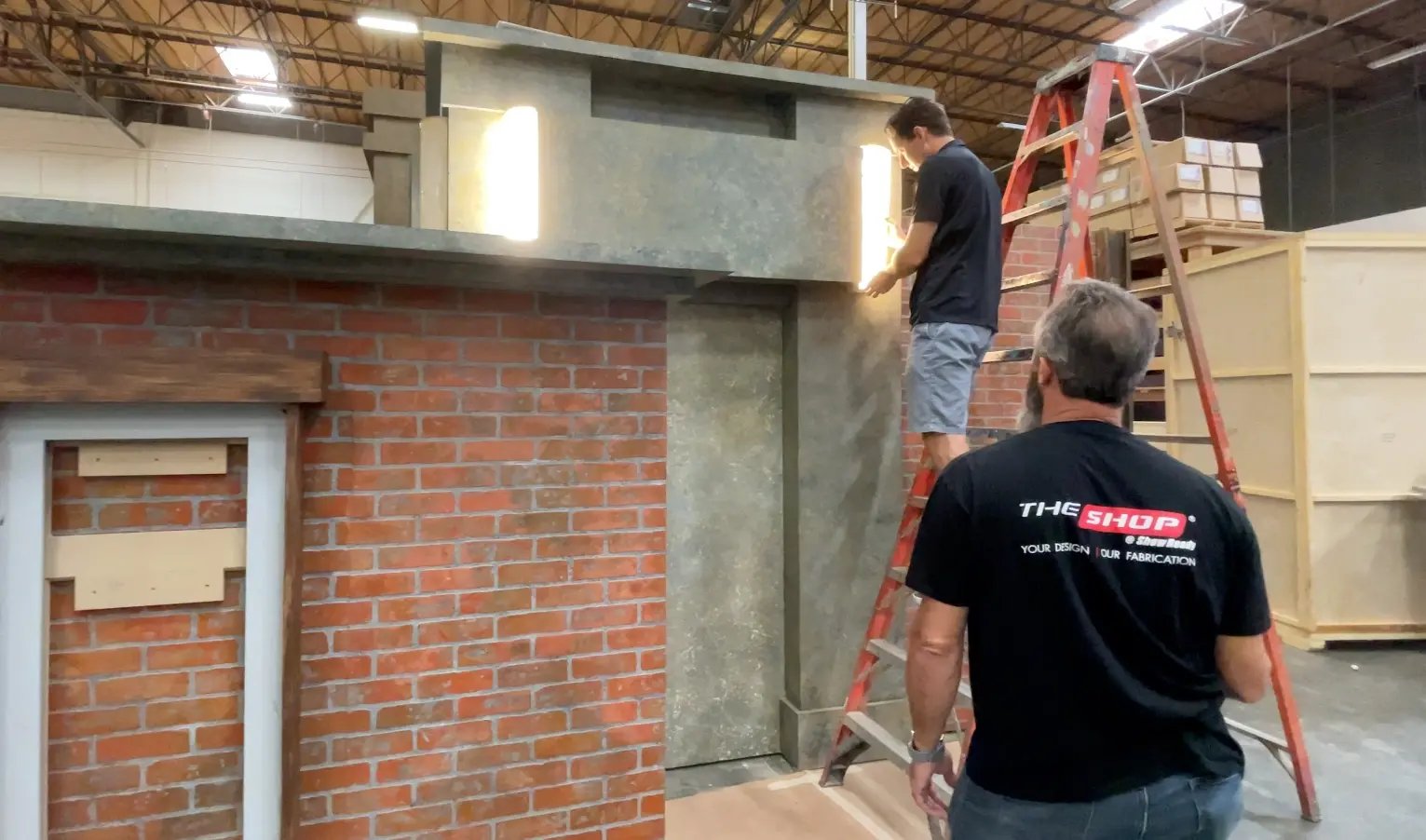
Scenic painting and finishing is where passion for the craft shows. Base coats, glazes, aging techniques, faux wood, stone, and metal finishes are applied by artists who work to match existing collections or brand palettes. Master craftsmen create artful pieces that stand the test of time.
Graphics production includes large-format wall murals, dimensional letters, and graphic panels that align precisely with surrounding scenic builds. Installation includes meticulous cleaning and polishing of exhibits before a museum opens to the public.
Integrating Digital Design, CNC, and New Technologies
Modern scenic fabrication in museums uses digital workflows similar to those in architecture, film, and themed entertainment to improve accuracy and speed.
3D scanning and photogrammetry capture existing building conditions or artifacts, allowing Show Ready to design scenic facades that fit within historic rooms or tight basements constructed decades earlier. This added precision prevents costly on-site surprises.
CNC routing and laser cutting are efficient methods for producing architectural components, including repeatable parts like decorative panels, topographical layers, and complex curves. What designers create in 3D is exactly what appears on the floor.
Digital sculpting and foam carving produce organic shapes such as rocks, trees, and landscapes. These are then hard-coated and painted to look convincing yet pass museum durability requirements.
Technology integration is where the fun of modern museum-making meets technical rigor. Scenic fabrication integrates tactile elements, integrated acoustics, and climate effects directly into walls and structures. Lighting, audio, projection, and interactive hardware are embedded with access panels, cable chases, and ventilation that technicians can service after opening day.
Show Ready actively coordinates with media and AV vendors during shop drawing review to avoid conflicts and rework during installation. This step alone can save weeks on a project schedule.
Materials, Durability, and Conservation Considerations for Museums
Museum scenic environments are open to the public six to seven days a week, often for eight to ten hours per day. Materials must withstand constant use while respecting conservation needs. Durability and public safety require heavy-duty materials for scenic builds.
Common scenic materials include:
- Hardwood and softwood framing, MDF, plywood
- Steel tube and aluminum extrusions
- EPS and urethane foams (High-Density Urethane Foam is commonly used for detailed scenic carving)
- Fiberglass, acrylics, and engineered plastics
- Thermoform plastics, utilized for realistic rock faces and textured panels
- Resins and epoxies, which cast durable tactile surfaces and replica artifacts
Different materials are chosen based on desired appearance and visitor interaction. Modern scenic fabrication must comply with strict fire codes and accessibility standards. Museum-specific concerns include VOC limits, off-gassing near sensitive artifacts, and use of conservation-approved paints, sealers, and adhesives.
Best practices for wear surfaces include high-pressure laminates on rail tops, scuff-resistant floor coatings, reinforced edges on interactives, and removable panels where damage is most likely. Sustainable materials are increasingly used to meet green museum standards, reflecting broader institutional commitments to environmental responsibility.
Show Ready collaborates with museum conservators and facility teams to choose materials that balance authenticity of look, life-cycle cost, and housekeeping routines.
Typical Project Timelines and Budget Drivers
Scenic fabrication schedules vary by project size, but most museum galleries move from signed contract to installation in a range of 4 to 18 months. Approximate phase durations include:
- Engineering and submittals: 4 to 8 weeks
- Fabrication and finishing: 8 to 16 weeks
- On-site installation: 1 to 6 weeks
Main budget drivers include volume of custom scenic elements versus standard casework, number of distinct finishes, complexity of curves and organic shapes, integration with technology, and whether the exhibit must travel between multiple museums. Early engagement with Show Ready has allowed museums to shave weeks off fabrication time by locking decisions earlier and minimizing redesign.

Sample Project Scope and Schedule Table
| Project Type | Scenic Area (sq ft) | Typical Fabrication Duration |
|---|---|---|
| Small Feature Exhibit | 500 to 1,500 | 8 to 12 weeks |
| Medium Permanent Gallery | 2,000 to 5,000 | 16 to 28 weeks |
| Large Signature Exhibition | 6,000 to 15,000 | 28 to 52 weeks |
| Traveling Exhibition (Multi-Venue) | 3,000 to 8,000 | 20 to 36 weeks |
These figures are illustrative. Show Ready develops precise estimates based on final design, location, and construction constraints. Museums should share target opening dates, fundraising milestones, and internal review schedules early so fabrication windows and installation teams can be aligned.
Comparison: In-House Builds vs. Partnering with Show Ready
Some museums have internal shops while others outsource fabrication entirely. Many use a hybrid model. In-house work offers staff familiarity with the building, flexibility for small changes, and the ability to handle minor repairs quickly.
However, museum shops often face limitations: limited CNC capacity, fewer specialized scenic painters, difficulty scaling up for capital projects, and administrative limits on overtime or travel. When a project is large enough that internal staff are stretched thin, the risk of delays and scope creep grows.
Partnering with Show Ready provides a deep bench of carpenters and scenic artists, proven coordination with national design firms, access to advanced equipment, and experience shipping and installing across multiple states. For medium and large scenic projects that require schedule certainty and complex coordination, an external partner in charge of fabrication is often the smarter business decision.
In-House Scenic Builds vs. Show Ready Partnership Table
| Factor | Typical In-House Museum Shop | Show Ready Partnership |
|---|---|---|
| Capacity for Large Projects | Often limited to small galleries and repairs | Built to handle multi-gallery and building-wide scenic programs |
| Specialized Scenic Painting | Generalist painters; limited faux finishes | Dedicated scenic artists skilled in aging, trompe-l'oeil, and large murals |
| Equipment | Basic woodworking tools, small-format printers | CNC routers, metal shop, spray booths, large-format graphics integration |
| Schedule Flexibility | Constrained by other internal maintenance priorities | Dedicated project scheduling focused on your opening date |
| Cost Predictability | Labor may be low but scope creep is common | Fixed-price contracts with clear deliverables and change-order controls |
| National Project Experience | Primarily local or internal projects | Experience with museums, zoos, and visitor centers across the United States |
Many museums use Show Ready as an extension of their own team, focusing internal shops on smaller, fast-turnaround needs while Show Ready handles complex scenic work.

Choosing the Right Scenic Fabrication Partner
Not all fabricators understand museum standards. Selecting a partner should focus on experience with interpretive environments, not just commercial interiors. When you talk to potential partners, the details of their museum portfolio will reveal whether they truly understand the work.
Key evaluation criteria include:
- Portfolio of museum and science center work since at least the mid-2010s
- References from curators and exhibit developers
- Safety record and understanding of building codes
- Ability to coordinate with architects and general contractors
- Transparent estimating with detailed alternates and value-engineering options
Ask potential partners how they manage change orders, protect scenic finishes during installation, and train their crews to work around artifacts and existing exhibits. The right partner will love these questions because they signal a museum that values quality.
Show Ready stands out because it is structured to act as a private-label fabrication arm for museums and design firms, with a culture of collaboration rather than one-off transactional builds.
Show Ready as Your Scenic Fabrication Partner of Choice
Show Ready's mission is to create reliable, high-quality scenic environments that allow museums to focus on content and community, not construction stress. Their teams of master craftsmen, craftswomen, artisans, and technicians collaborate closely with exhibit designers, interpretive planners, and curators.
Show Ready routinely provides private-label fabrication services, stepping in behind leading design studios so museums receive a seamless design-to-build experience. Specific strengths include:
- Rigorous project management with dedicated PMs
- Proactive value engineering that preserves storytelling
- Consistent finish quality across phases and venues
- Ability to mobilize installation teams that understand museum operations
Show Ready vs. a Typical Scenic Vendor Table
| Aspect | Typical Scenic Vendor | Show Ready |
|---|---|---|
| Primary Market Focus | Events, retail, or theater sets | Museums, visitor centers, and educational experiences |
| Approach to Design Intent | Interprets drawings loosely to reduce effort | Collaborates with designers to faithfully realize intent while optimizing constructability |
| Value Engineering | Focused primarily on cutting cost | Balances savings with durability, safety, and visitor impact |
| Museum Standards | Limited experience with conservation and accessibility | Comfortable working with conservators, registrars, and ADA consultants |
| Project Management | Basic scheduling, limited reporting | Dedicated PMs, detailed schedules, and regular status reporting to museum leadership |
Case-Based Examples of Scenic Fabrication in Action
Concrete examples help illustrate how scenic fabrication decisions play out in real museums.
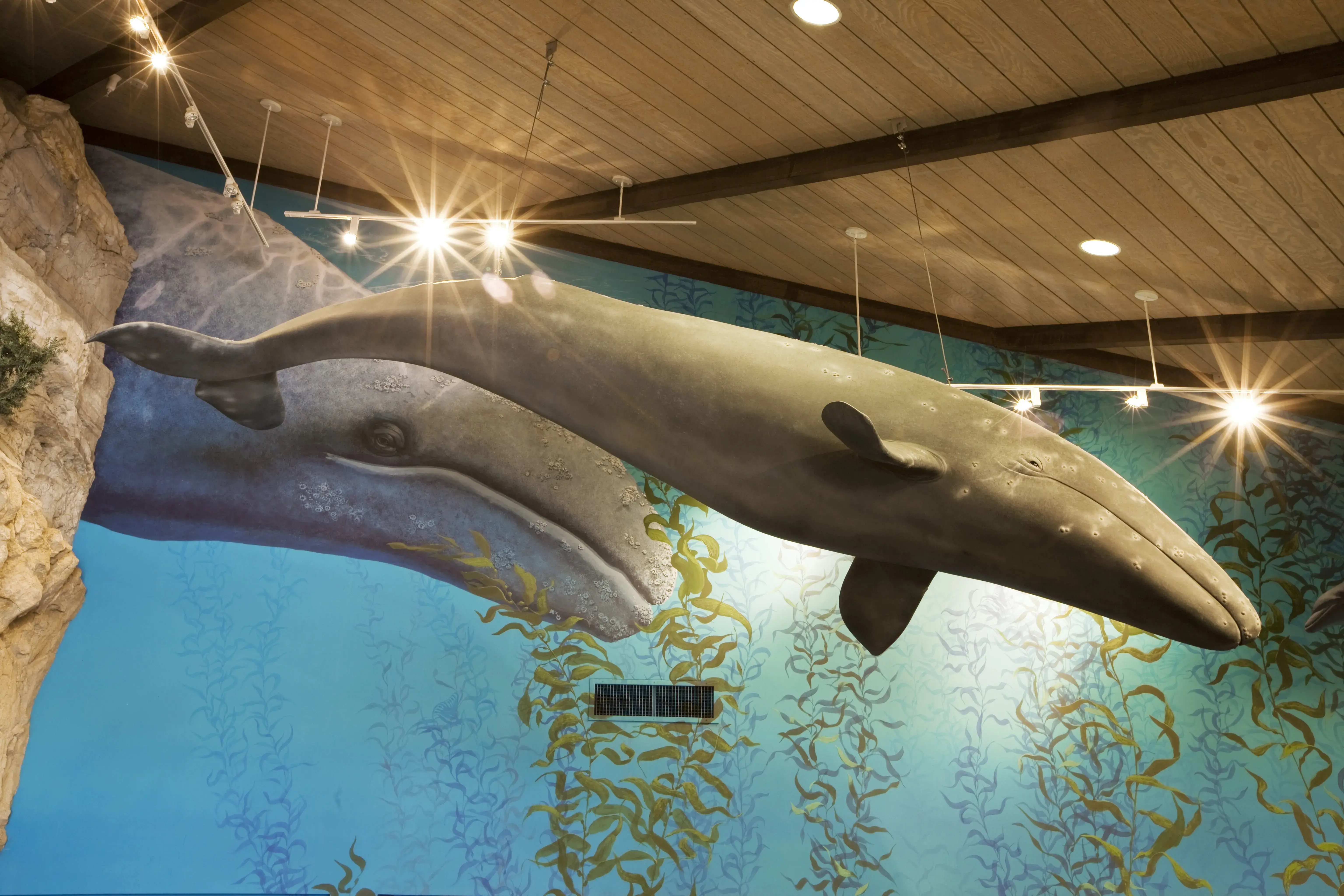
Palos Verdes Interpretive Center. “Our Ocean Our Friend” is a three-zone gallery refresh on the Palos Verdes coast. The Whale Wall compares 12 cetaceans seen off Point Vicente, from blue whales to common dolphins, as full-scale silhouettes with human divers for scale. The graphics are printed on plexiglass and mounted on stand-offs engineered to clear the curved wall. The Ocean wall makes the case for the sea’s value to climate, trade, food and medicine, with wave projection and vinyl flooring that carry the water into the room. The Deep Diver exhibit is built around a donated sperm whale jaw and covers echolocation, 3,300-foot dives and the animal’s oils.
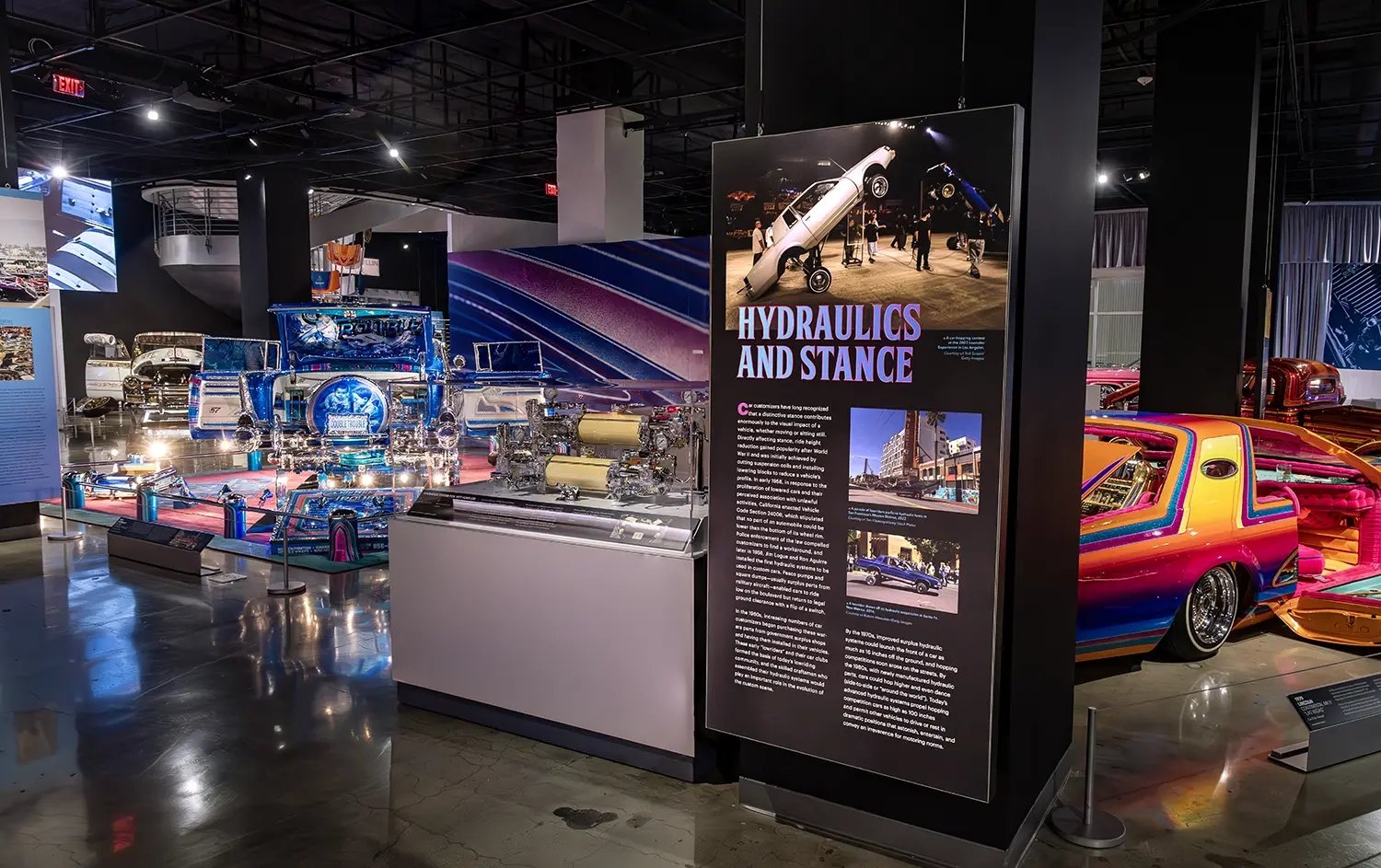
Petersen Automotive Museum, Best in Low. Lowrider culture treats a car as a canvas, and the Petersen wanted an exhibit that said so in a clean, modern, museum-grade room. Show Ready built six thematic sections around a 17-foot staircase sculpture. It carries 24 mini car hoods, each painted by a different lowrider artist. Lit floor mirrors under the featured cars put hydraulics and undercarriage work in plain view, so casual visitors could see the details only enthusiasts usually notice. Tunable white LEDs on the intro wall and mirror units let museum staff adjust the lighting over a months-long run.
Nix Nature Center, Laguna Coast Wilderness Park. The Nix is the front door to 20,000 acres of coastal canyon wilderness, and its exhibits have to make that landscape real before visitors ever hit a trail. Show Ready built the scenic environment: sculpted rock formations, lush foliage graphics and lifelike natural detail, crafted to read as the canyon itself. The result is an immersive interpretive space that supports the center’s school programs, guided hikes and family visits.
These examples underline Show Ready's ability to balance feasibility, visitor impact, and long-term maintainability for a wide variety of museums.
Materials and Maintenance Planning Table
Long-term success requires thinking about cleaning, repair, and refresh cycles during initial design and fabrication. The table below summarizes how typical scenic material choices affect maintenance and life expectancy.
| Material / Finish | Typical Use | Expected Service Life in Public Use | Maintenance Notes |
|---|---|---|---|
| Painted MDF Panels | Walls, scenic flats | 5 to 7 years | Requires touch-up paint in high-traffic zones every 1 to 2 years |
| High-Pressure Laminate (HPL) | Rails, counters, interactives | 10 to 15 years | Highly scuff-resistant; clean with non-abrasive cleaners |
| Hard-Coated Foam Rockwork | Thematic landscapes | 8 to 12 years | Inspect for chips annually; localized patching typically sufficient |
| Powder-Coated Steel | Frames, handrails | 15+ years | Very durable; check annually for scratches near high-contact areas |
Museums should discuss maintenance capabilities with Show Ready early so access points, spare finish materials, and documentation sets are included in the project scope.
Frequent Questions
The following questions address practical issues museums often raise, especially for teams new to partnering with scenic fabricators.
How early should we bring a scenic fabricator like Show Ready into our museum project?
Ideal involvement starts during schematic design or early design development, often 12 to 24 months before opening. This allows Show Ready to advise on constructability, budget alignment, and phasing. Later involvement is possible, but earlier collaboration typically results in fewer change orders, more efficient structures, and clearer expectations for all stakeholders.
Can Show Ready work directly with our exhibit designer or architect?
Yes. Show Ready regularly partners with independent exhibit designers, architecture firms, and interpretive planners, operating as a seamless extension of their team. Shop drawings, samples, and progress reviews are coordinated with both the museum client and the design team to ensure design intent is preserved.
What information should we prepare before requesting a scenic fabrication estimate?
Useful items include current floor plans, preliminary exhibit layouts, renderings or sketches, a rough budget target, opening date, and any known conservation or building-code constraints. Even if some information is still evolving, an early conversation with Show Ready can help refine scope and flag risks before they become critical.
Can Show Ready support traveling or multi-venue exhibitions?
Show Ready engineers scenic components to pack efficiently, withstand repeated installations, and adapt to different room dimensions across host museums. The team accounts for crate design, hardware selection, assembly instructions, and labeling so that different venue crews can safely and consistently install the scenic elements.
How does Show Ready help ensure visitor safety in scenic environments?
Show Ready designs scenic elements to meet relevant building, fire, and accessibility codes, collaborating with local authorities and the museum's facility team as needed. Specific safety measures include non-slip finishes on platforms, rounded edges on reach zones, guardrails where required, and hidden structural reinforcement behind scenic facades.